
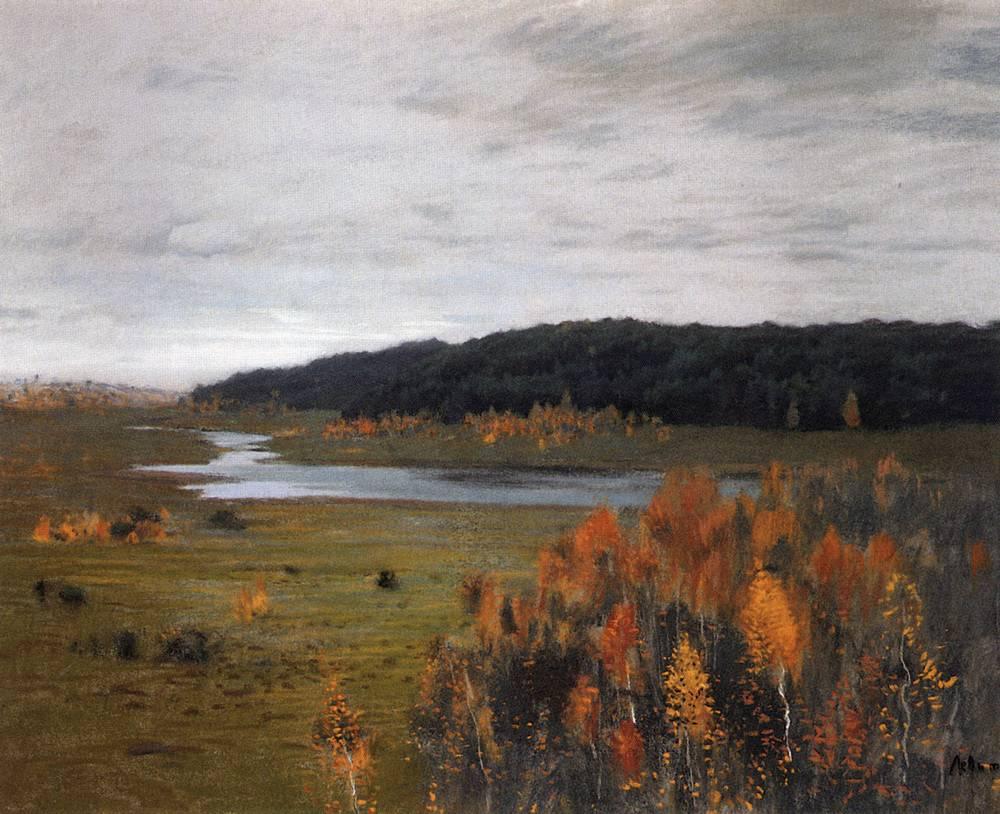
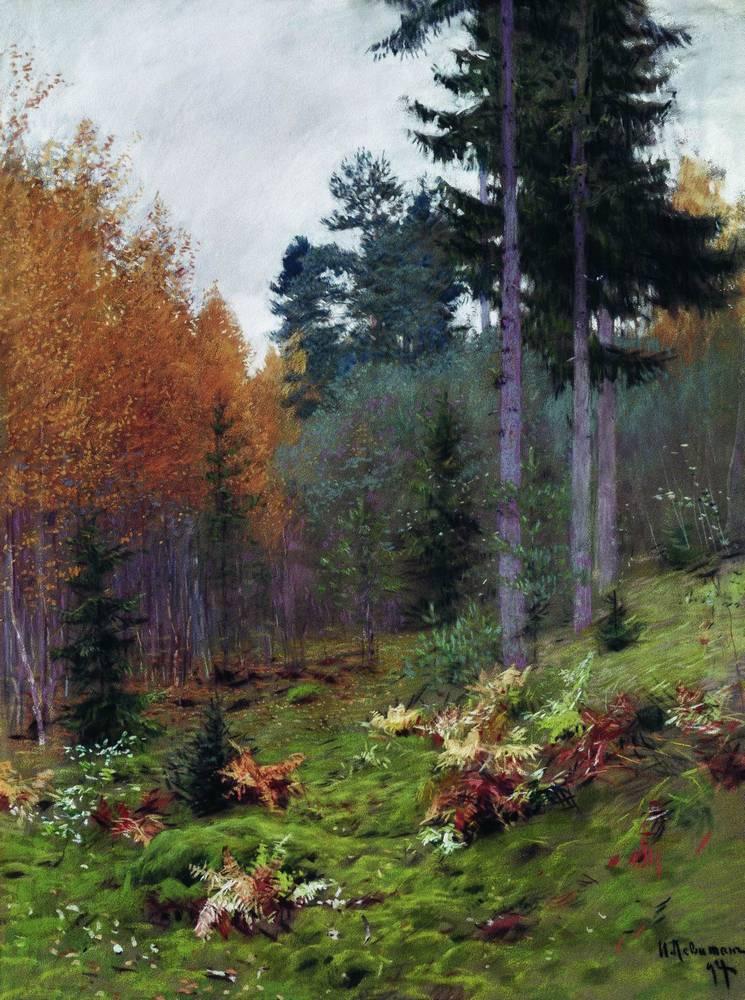
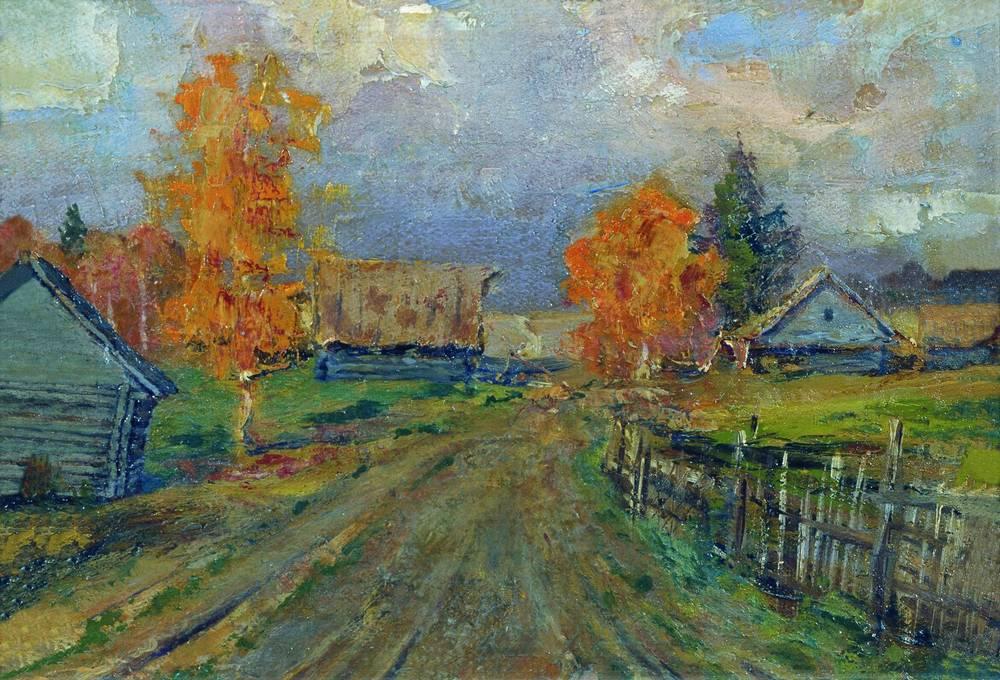
Isaak Levitan painted more than a hundred autumn landscapes over the course of his career — a staggering devotion to a single season that says as much about an artist’s temperament as any single canvas could. For Levitan, autumn wasn’t a subject he returned to out of habit. It was where he found some of his most joyful, most daring color, and, later in life, some of his most quietly experimental mark-making — territory that should feel like home to any pastelist chasing the season’s fleeting light.
His best-known autumn work, Golden Autumn (1895, State Tretyakov Gallery), is a masterclass in color contrast. Levitan built the entire painting around the tension between gold and blue — sun-struck birches and aspens against a cool, slow-moving river and a pale, cloud-scattered sky. It’s brighter and more optimistic than much of his other work, which tends toward softer, more melancholic tones, and that shift alone is worth studying: sometimes the most memorable autumn paintings come from leaning into vibrancy rather than retreating into gentleness.
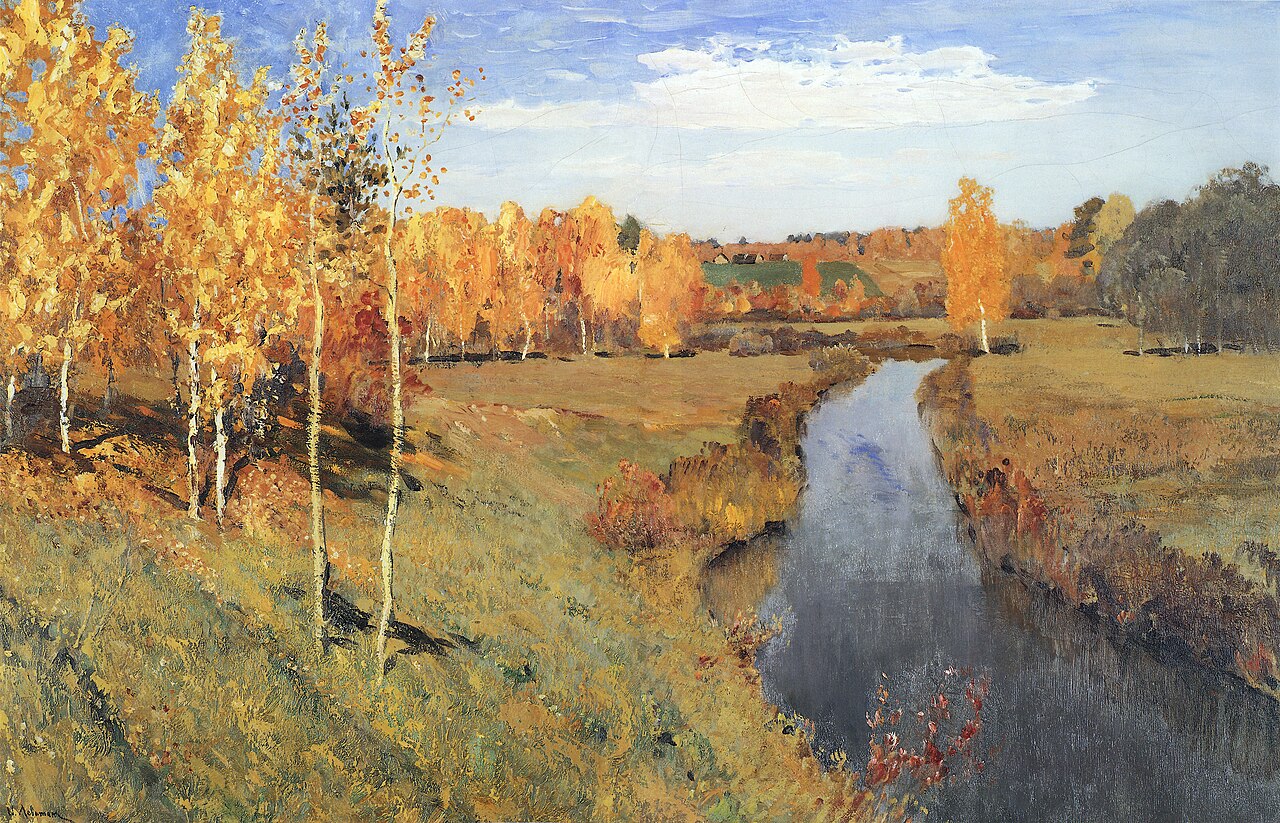
Look closely at how Levitan built that color. The foreground meadow reads as a single unified patch of green-gold from a distance, but up close it’s built from small, varied strokes — brownish undertones woven through the greens and yellows, nothing flat or uniform. The river does the same trick in blue, its base tone interrupted by reflected warmth from the banks. It’s a reminder that convincing color in a landscape rarely comes from a single hue — it comes from layered temperature shifts that only reveal themselves at a distance.
Levitan’s brushwork in Golden Autumn is notably freer and more vigorous than in his earlier work — thick, expressive strokes on the birch foliage that create an almost relief-like texture. For pastel artists, that’s a familiar instinct: knowing when to let the stroke itself carry the energy of a scene rather than smoothing it into submission.
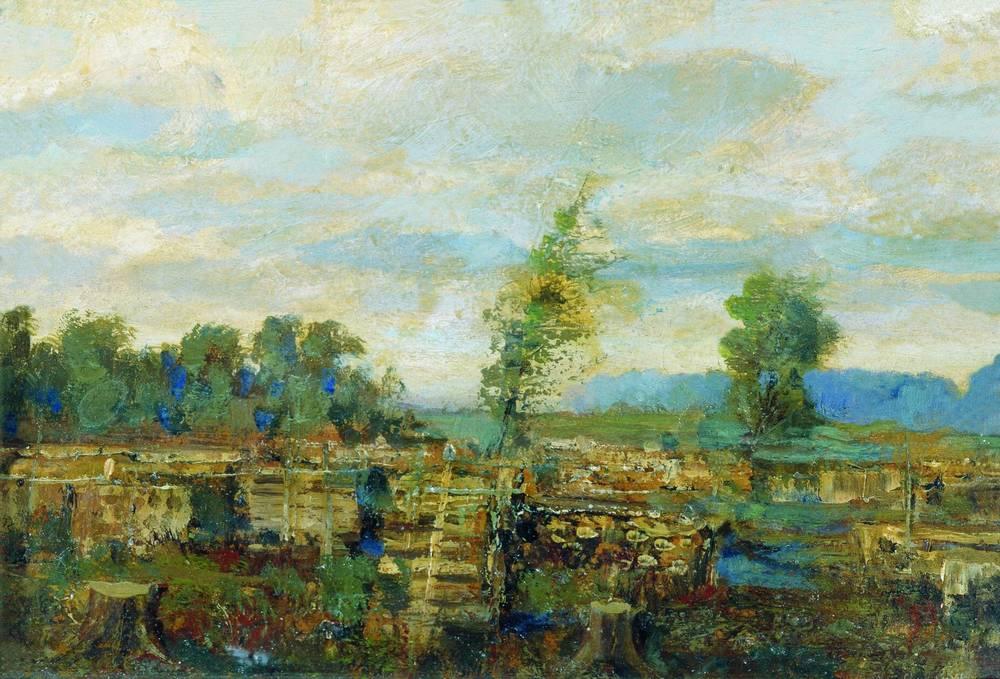
Later in his career, Levitan turned to pastel directly, producing works like Autumnal Day and Autumn in the late 1890s. These are quieter, more distilled pieces — spare forms, generalized shapes, a more decorative and emotionally direct approach than his earlier, more descriptive landscapes. They point toward a Levitan still evolving, still asking how much could be left out of a scene while keeping its feeling intact — a question every pastelist eventually has to answer for themselves.
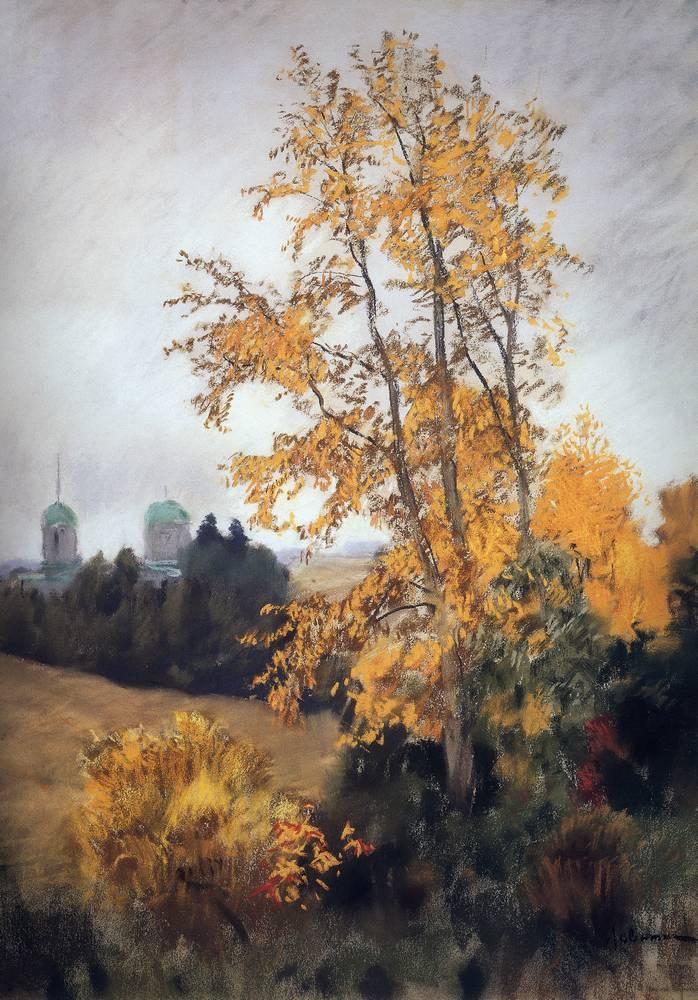
Autumn rewards that kind of looking. The color is loud, but it’s also brief — here for a matter of weeks before the palette shifts again. Levitan spent a lifetime chasing it. As the season turns this year, it’s worth asking what your hundred autumn paintings might look like — and what you’d learn about your own color and mark-making by returning to this one season, again and again, the way he did.
Levitan spent a lifetime refining his eye for autumn, but you don’t need a hundred paintings and several decades to start sharpening your own. Realism Live, happening this November, brings together working artists for real-time painting demonstrations, in-depth critiques, and hands-on instruction in color, value, and brushwork. Registration is open now.