
It was Clark Mitchell who first suggested the show.
The pastelist had long felt the pull of Point Reyes National Seashore — that dramatic peninsula north of San Francisco, steeped in history, bordered by Drakes Bay where Sir Francis Drake is said to have landed, its cliffs yielding fossilized whale bones, its ranchlands stewarded by immigrant farming families for generations. Mitchell shared his affection for the area with fellow artist Barbara Tapp, a watercolorist and gouache painter who had been returning to the same beloved landscape for years. He proposed they mount an exhibition together at Toby’s Feed Barn, a beloved local general store and gallery. They would be joined by oil painter Dan Rogers, a student of Camille Przewodek (1947–2024). Each would interpret the landscape through their own medium and sensibility.
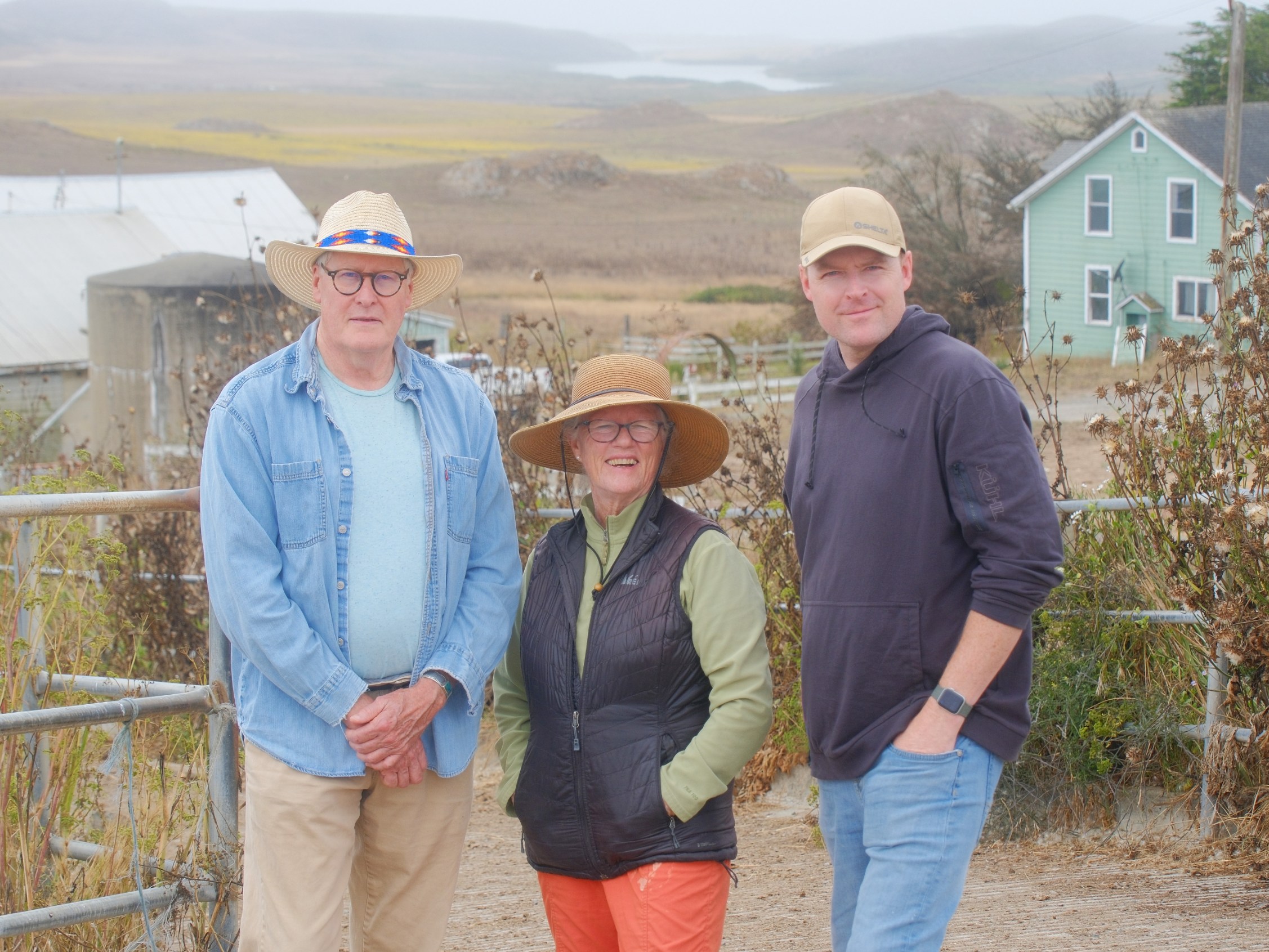
What none of them knew yet was that the land itself was about to change forever. Eleven multi-generational ranching families had just agreed to retire their government leases, returning 28,000 acres to conservation. The deadline to vacate was April 2026 — just months after the show would open. What had begun as a celebration of a beloved place became something far more urgent: a document of a disappearing way of life.
A Pastelist Meets the Point
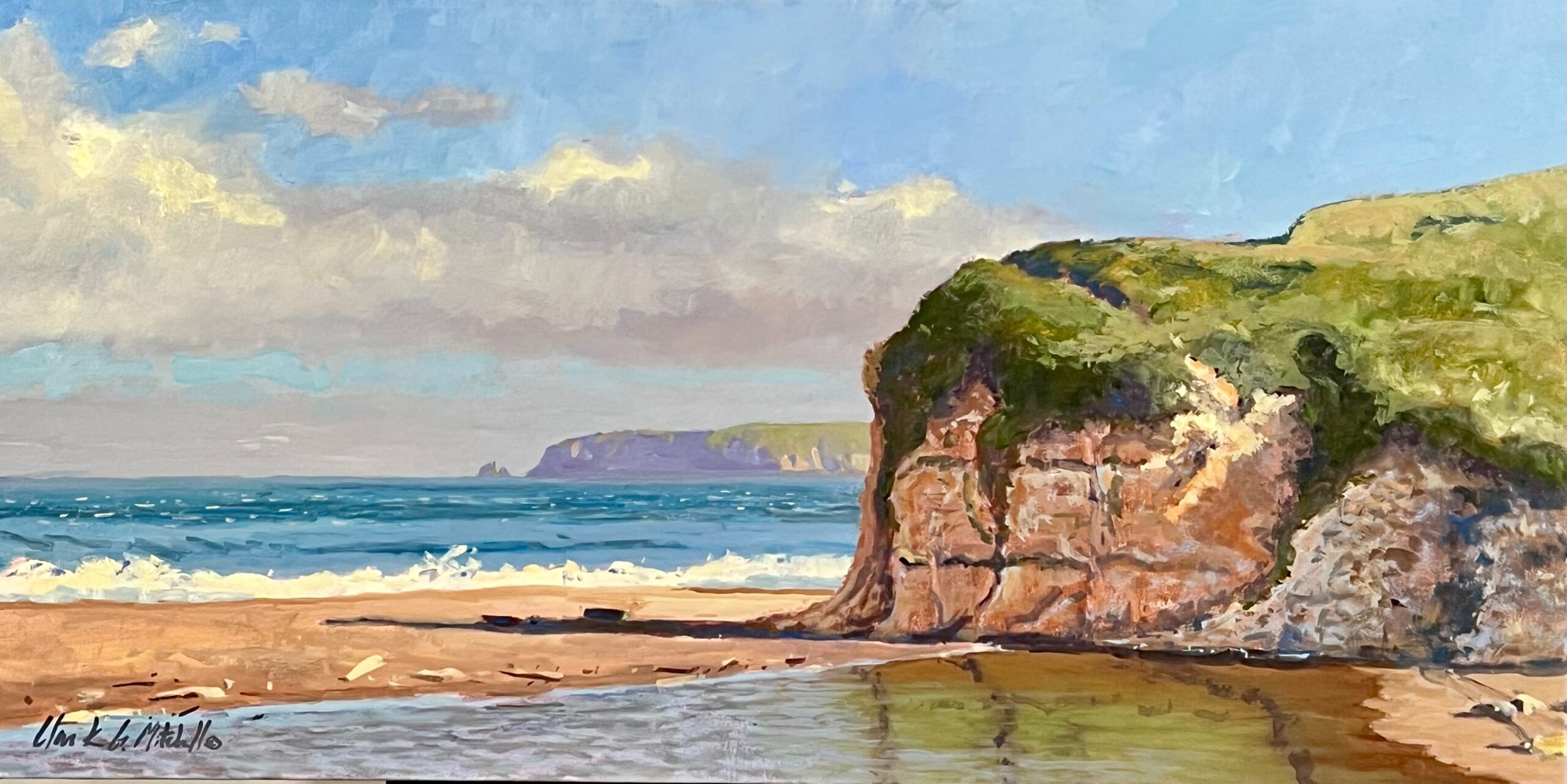
For Clark, the land itself was revelation enough. “On our first trip out to the Point I was stunned to find spectacular drifts of yellow bush lupine and a wonderful array of other wildflowers along roadsides and in pastures,” he says. “The interplay of soft rolling terrain down to the water’s edge, forested hillsides, steep rocky cliffs, contrasting with the wide or narrow inlets of water or the sea beyond caught my imagination and continues to inspire me.”
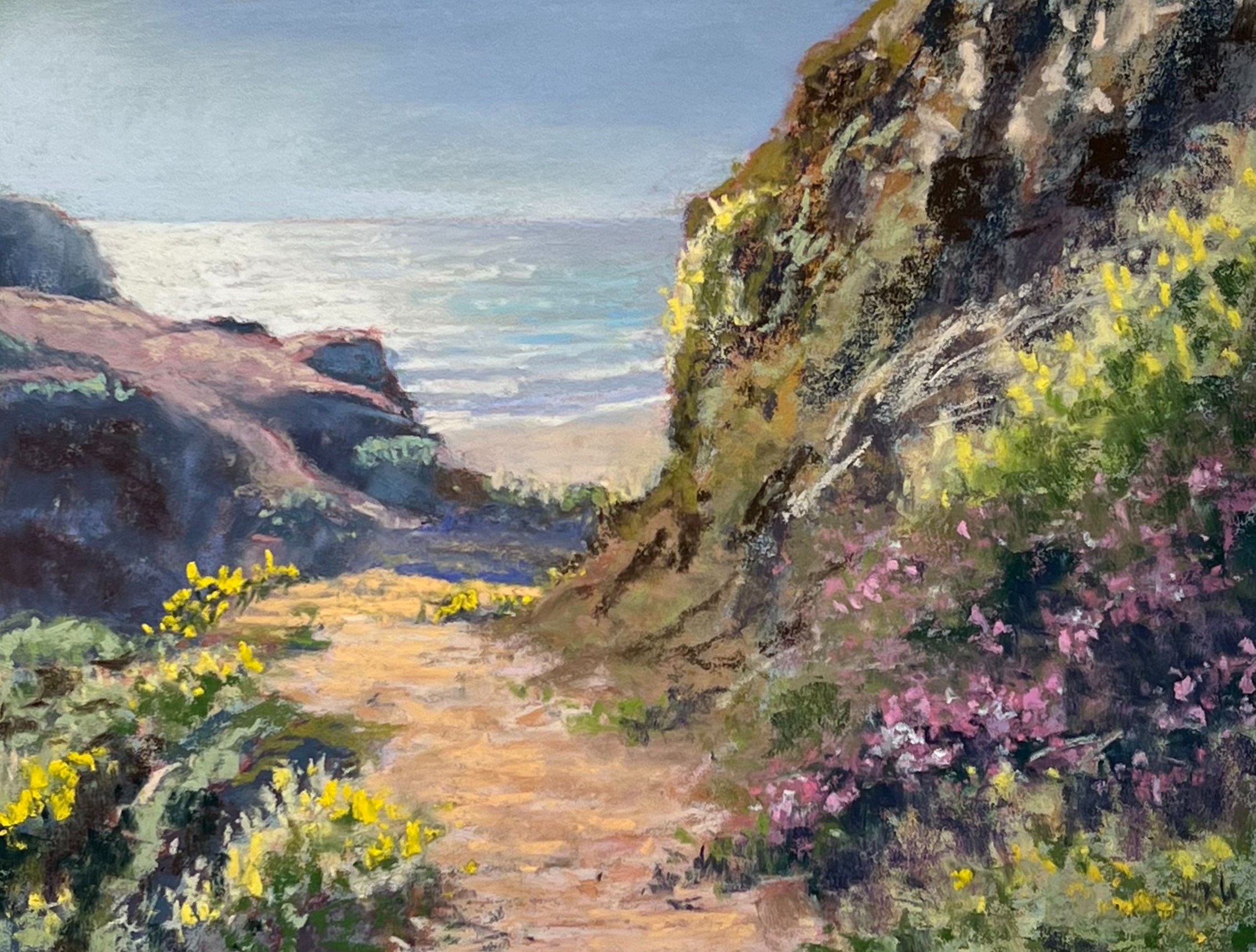
It is the kind of landscape that seems made for pastel — the soft, layered light of the Northern California coast, the infinite greens of the headlands, the way the fog sits in the low places and the sun catches the tops of the bluffs. Clark returned again and again, each visit yielding new compositions, new light, new reasons to stay.
On one visit, all three artists went out to the Point together. Clark came back, as Barbara describes it, “with stars in his eyes because he was so struck by its magnificence.” The scale of the place — where ranchland meets coastal bluff meets the open Pacific — is the kind of thing that humbles a painter and galvanizes them at the same time.
Nothing But the Truth
All three artists were deliberate about staying non-political — honoring the land and the people who had worked it without imposing a narrative or passing judgment on the conservation decision. For Clark, the land itself made that straightforward. His attention was absorbed by what was directly in front of him: the wildflowers, the terrain, the light on the water, the drama of a coastline that had been shaped over millennia and was now, in a matter of months, about to be reshaped again.
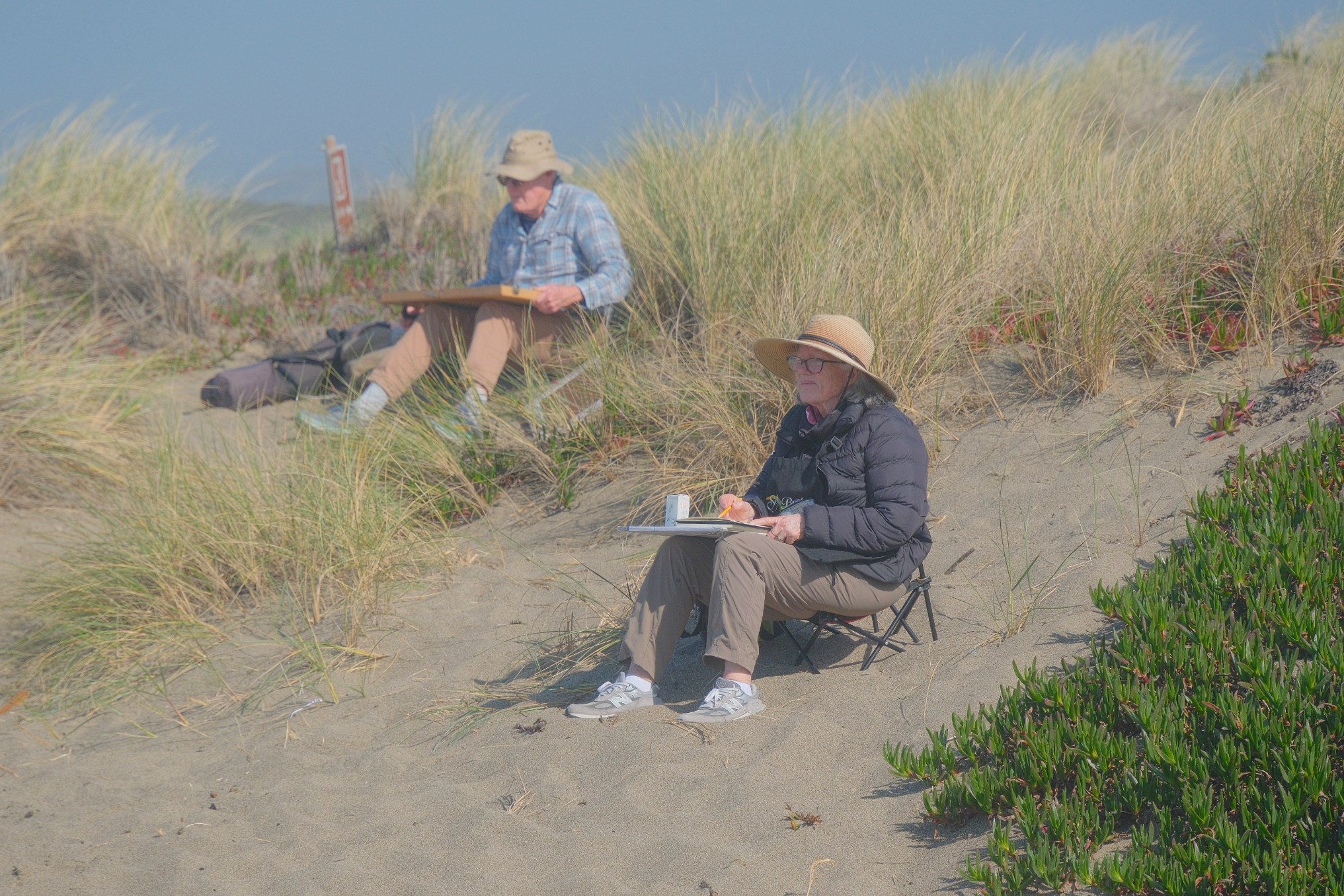
The exhibition, titled Point of Change, aimed not to mourn but to celebrate — educating visitors about the land and its history, and bringing the community together around what had been, and what was still there to be seen.
The Living Landscape
The ranching families came to the show. And for many, the paintings were more than beautiful works of art — they were recognition, an unexpected act of love, and a record of something that would not exist in quite the same way again.
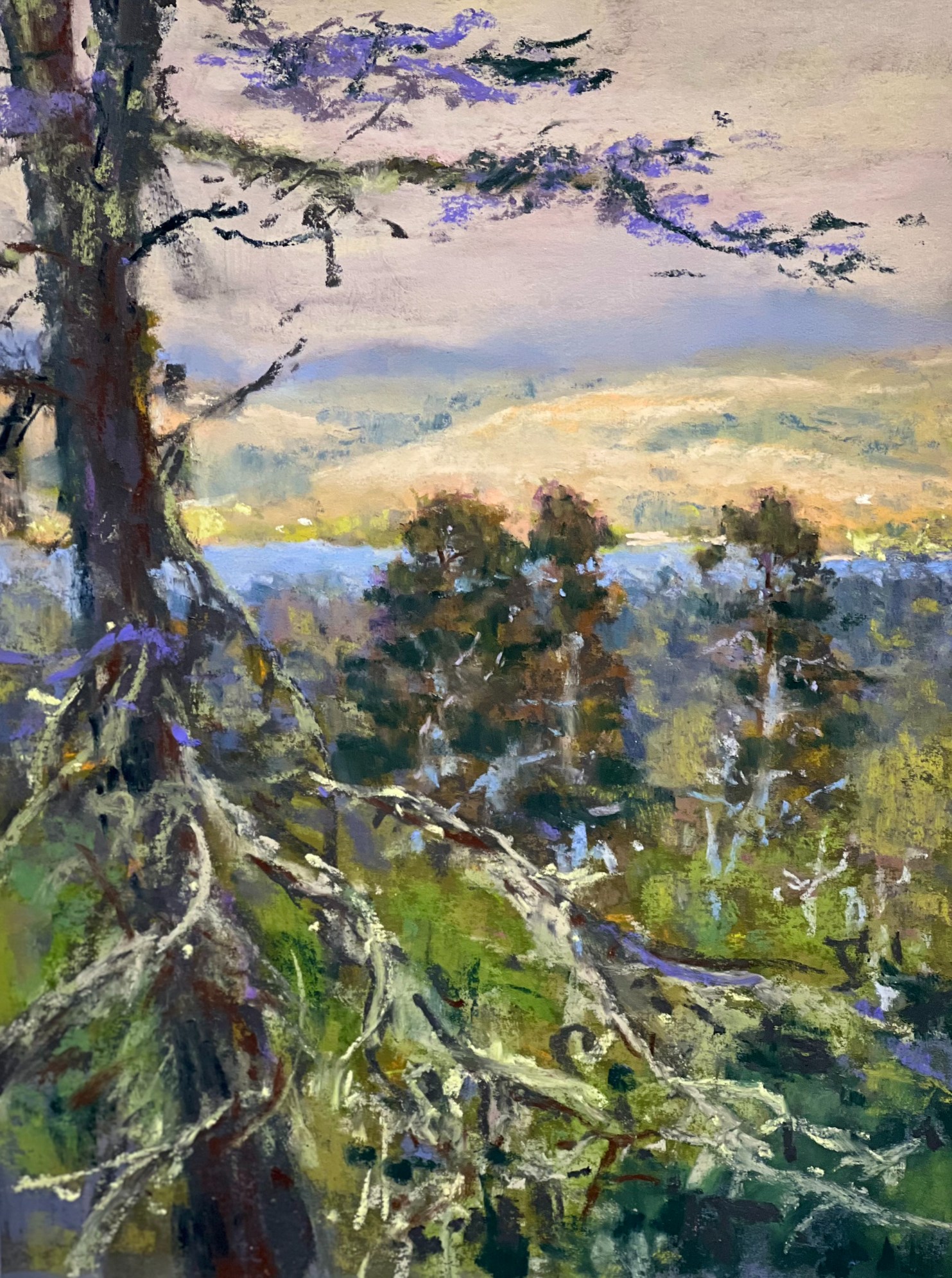
Although the exhibition is over, the story of Point Reyes continues to unfold — for Clark no less than for his fellow painters. The land is already changing. Sand dunes shift the terrain season by season. Plants are pushing up where cattle once grazed. A well-traveled road has been reclaimed by nature entirely.
For Clark, whose pastel practice is built on direct observation and an unwavering responsiveness to place, Point Reyes has proven to be exactly the kind of subject that keeps giving. “The interplay of soft rolling terrain down to the water’s edge,” he says, “caught my imagination and continues to inspire me.”
It is, in the end, what plein air painting does best — catching a particular moment, in a particular place, before it changes. At Point Reyes, that has never felt more urgent, or more necessary.
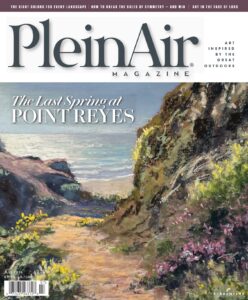 It’s fitting that the same landscape that gave Clark Wildflowers at the Beach also gave him the cover of PleinAir Magazine’s June-July issue, on newsstands now.
Published bi-monthly, PleinAir Magazine brings together the best historical and contemporary landscape painting from around the world.