
What is it about pastels that has watercolor and oil painters packing up their brushes and stashing their palettes? For artists Allison Krajcik, Jill Stefani Wagner, and Lon Brauer, pastel has offered not just a fresh set of tools, but a radically different way of seeing and expressing light and color. Whether rediscovering the medium after decades or falling for it on a whim, these artists share how pastel deepened their practice — and why others might consider making the leap.
In this edition (Part 1 of 3), we hear from Allison Krajcik.
PURE COLOR THAT’S FORGIVING | ALLISON KRAJCIK
After years of navigating the delicate balance of watercolor, Allison Krajcik found herself craving a more forgiving medium. “I’d become frustrated with having to dance around the white of the paper to save my lights and highlights,” she says, “and it was too easy to make mud if I wasn’t careful with my washes.”
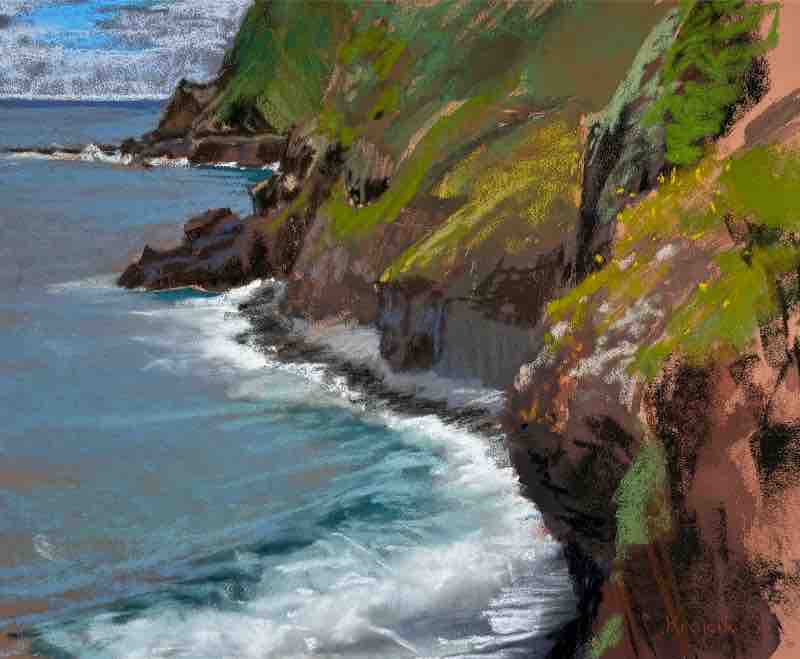
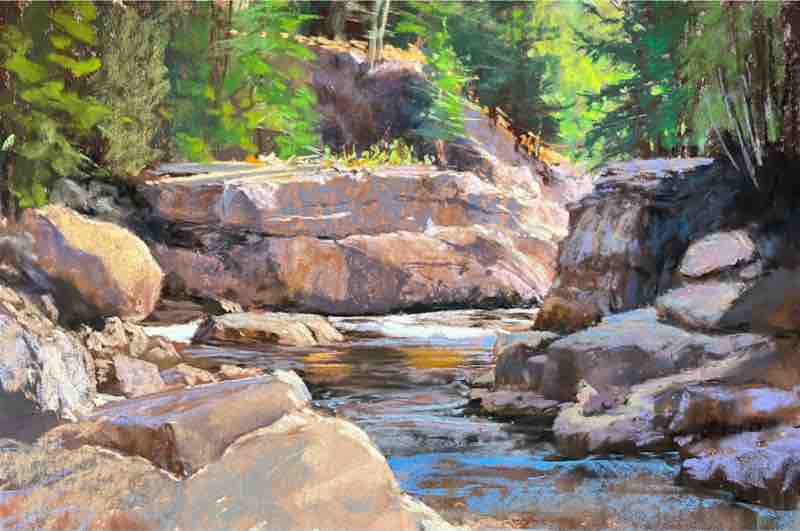
With pastels, Krajcik discovered she could embrace a bolder, more experimental approach to her work. “The dry nature of the medium means that the colors stay pure even when I apply one on top of another, creating a depth and intensity I could never achieve with watercolor — and no mud,” she says. “Plus, I can add highlights at any time, and even brush off what doesn’t work.” Her first stoke of pastel en plein air — a blue-green dragged across a cinnamon-toned Sennelier La Carte paper — was a revelation. “The complementary color vibration was so immediate and alive. I was hooked!”

Still, the transition came with a learning curve — starting with trading brushes for fingers. “When it came to blending colors in pastel, I learned the hard way to make sure my hands were clean — and that sanded surfaces can take a toll on the skin. Now, I use medical tape to protect my fingers, and finger cots to help with the mess.”
The artist also had to adjust her technique for covering large areas of her surface with color — a process that proved more difficult with a dry medium. “To accomplish with pastel what I could do with a simple wash of watercolor, I either had to use a colored paper or create an underpainting by blending broad strokes of pastel with water or alcohol and letting it dry.”
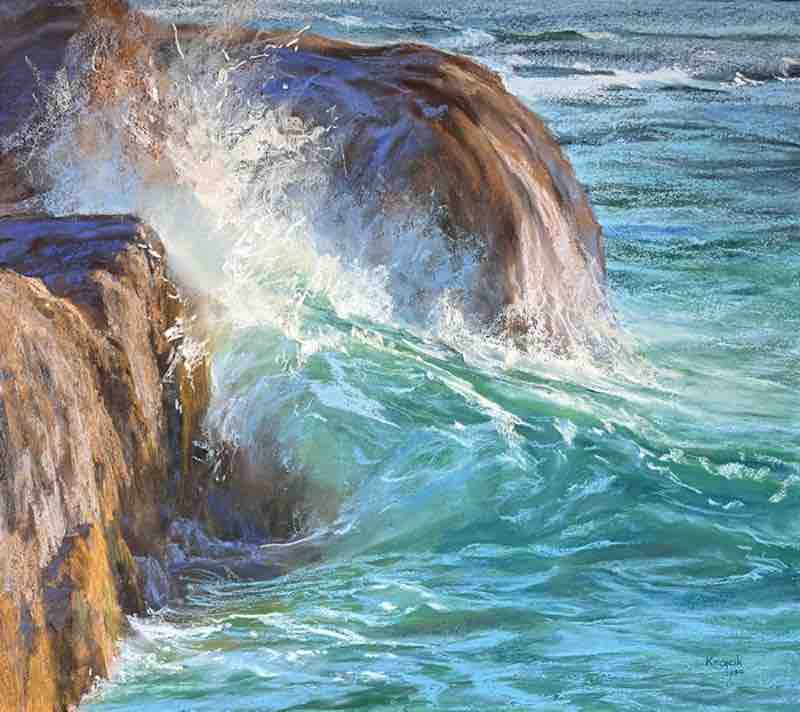
But pastel didn’t just change her technique — it expanded her artistic mindset. “I went from a limited primary palette to over 450 sticks, all pre-mixed and full of nuance,” she says. “In addition to expanding my palette, pastels made it easier to understand how important relative color temperature is when it comes to creating luminosity.”
For other watercolorists considering a transition to pastels, she recommends swiping a range of colors over a dry watercolor or pastel underpainting to see how the colors come to life. “In particular, study basic complementary combinations — orange and blue; yellow and purple; and red and green — to identify their potential,” she says. “Consider, for example, how a reddish underpainting could be effective when painting a green field.
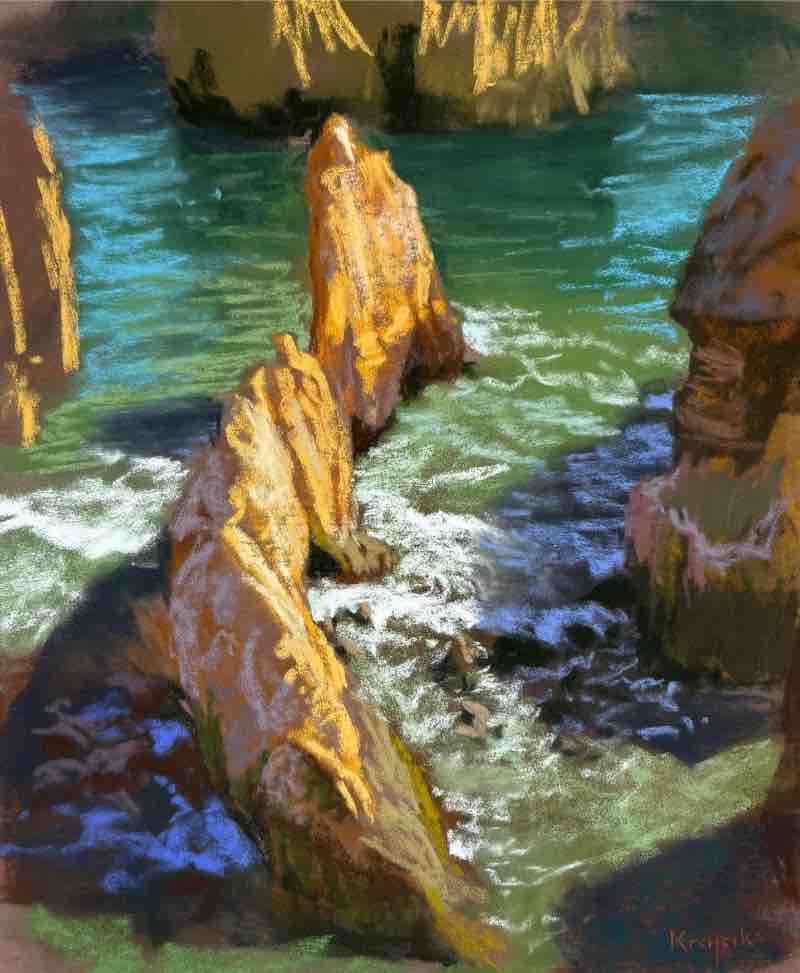
“I also recommend coating a failed watercolor painting or study with clear gesso, letting it dry, then applying pastel over top,” Krajcik continues. “Opaque gesso can also be used to lighten a too-dark painting or substrate before applying pastel on top. Of course, some papers need to be mounted or stretched first, but that’s nothing new to a watercolorist. And the fact that you can work that painting for a long time without fear of failure is totally worth it!”
Paint along with Vera Kavura, Aaron Schuerr, W. Truman Hosner, and Rita Kirkman at Pastel Live, September 17 – 19, 2025, with an optional Essential Techniques Day on September 16.