
What is it about pastels that has watercolor and oil painters packing up their brushes and stashing their palettes? For artists Allison Krajcik, Jill Stefani Wagner, and Lon Brauer, pastel has offered not just a fresh set of tools, but a radically different way of seeing and expressing light and color. Whether rediscovering the medium after decades or falling for it on a whim, these artists share how pastel deepened their practice — and why others might consider making the leap.
In this edition (Part 3 of 3), we hear from Lon Brauer.
PASTELS ARE FAST, FRESH, AND FUN
Before he got an invitation to demo at the 2025 Plein Air Convention & Expo (PACE), Lon Brauer hadn’t touched a pastel since high school. “I had done oil painting demos at previous PACE events, so when I was offered a place on this year’s faculty I asked if there might be something different I could do. I was told the only other available spot was on the pastel stage — I took it.”
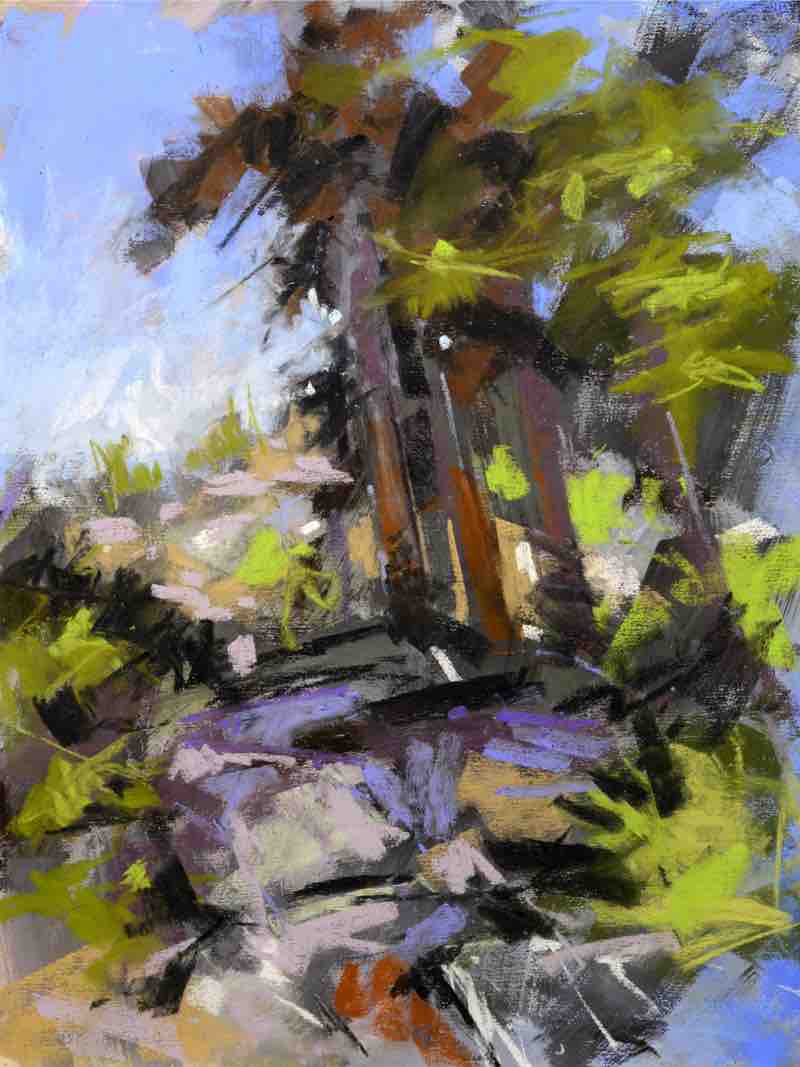
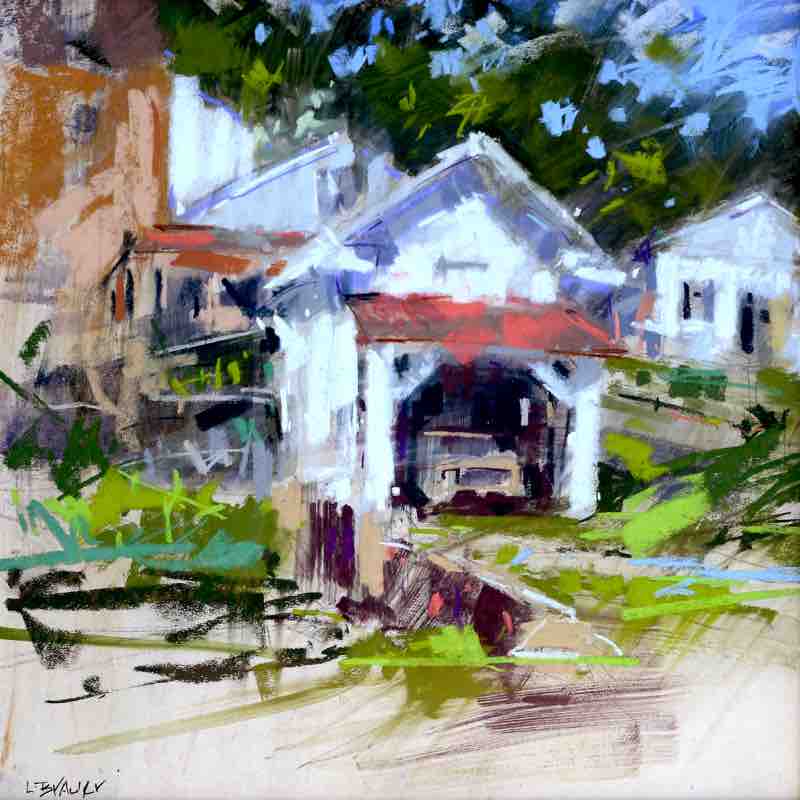
Although he’d cut his teeth on pastels early in his artistic journey, Brauer had some catching up to do. “To my delight, the aggressive painting techniques I use in oil translated beautifully,” he says. Never one to be stingy with paint, he found his more-is-more approach suited pastel just fine. “I put out a lot of oil paint on my palette so that I have what I want when I need it — you can’t paint without paint, can you? When I’m in the groove, I just want to be able to pick up color on my brush and put it down on my canvas. Pastel is much the same. I find the color in my box, put it on the paper, then move on. In other words, I find the shapes, fill them in, and the painting paints itself.”
His biggest happy surprise at reconnecting with pastel was the drawing aspect inherent with the medium. “Pastel hearkens back to our early years with crayons,” he says. “We never forget that stuff. It’s fast, easy, and full of color! Whether using a fat piece of soft, velvety color or a stick of hard pastel, we can incorporate visible linework to drive our composition. Is pastel painting? Yes! Is it drawing? Yes, that too! It’s both. There’s a fresh, graphic, and immediate aspect to pastel that had been elusive in my oil work.”
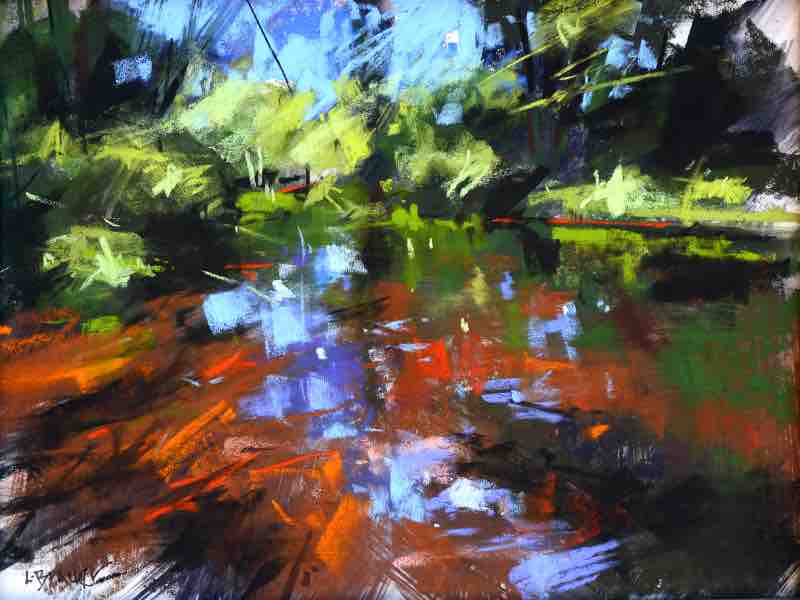
Although he still looks for the same sorts of visuals in his subjects, pastels have introduced looseness and speed to his process. “When working with soft pastels, I’m not as likely to get bogged down in detail work,” he says. “The tool is just too crude — and that’s fine with me. Pastel keeps me loose, and my mark-making fresh.”
His advice to fellow oil painters at the start of their journey with pastels: buy a curated set from a trusted brand, use the medium to “draw” rather than “paint,” then take that mindset to your oil painting. Soon enough you’ll see the similarities between mark-making and brushstrokes.
The Plein Air Convention could be the key to your next pastel breakthrough! Join us May 14-18 in The Ozarks.