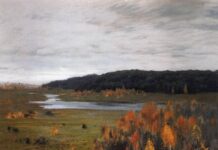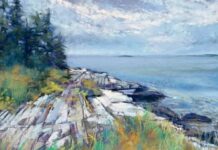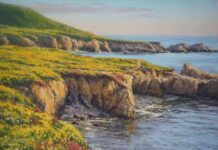


To paint better trees, you need to understand trees better. That’s the surprising verdict of 20th century landscape painter and author John F. Carlson. In his iconic Carlson’s Guide to Landscape Painting, he says: “It is curious how one’s feelings about trees change in proportion to one’s appreciation of their importance and dignity as live beings. Trees are individual beings: they can be comic, heroic, tragic to the sensitive, practiced eye of the landscape artist.”
Here, Albert Handell tells you not just how to paint trees, but how to know trees — and that can make all the difference in your results.
“I strongly believe that if you’re going to paint trees, you should do as much as you can on location,” he says. “Start by simply panning in on a small area — a group of trees or even part of a tree — as if you were painting a portrait or still life. Painting outside with all of nature before you can make all the difference in your work.”

FIND A RHYTHM
“I find inspiration in the inner rhythms of nature — the branching patterns of trees, for example. When I first started painting, I looked at each branch and thought about where to place it in comparison to others. Now, I see an interesting twist in a tree, and I focus on that. I think less about getting the measurements right, and more about the rhythm or movement within the tree, from a flutter of leaves at the top to branches that get thicker or thinner as I move down the trunk. Varying my colors, strokes, and the pressure I use on the sticks, I make marks and react to them. Each stroke carries the feeling of the natural movement and structure of the tree. The subject comes to life with scarcely a scrap of detail.”
UNDERSTAND THE UNDERLYING STRUCTURE
“When I started working on landscapes, I was in Woodstock, New York; this was from 1970 to 1983. I couldn’t wait until the greens of summer disappeared, so I could see the skeletons of my trees. I went out in the fall and winter to draw them with pencil on two-ply Bristol board, one right after the other. And that’s how I was able to really get into trees and understand them so well.”
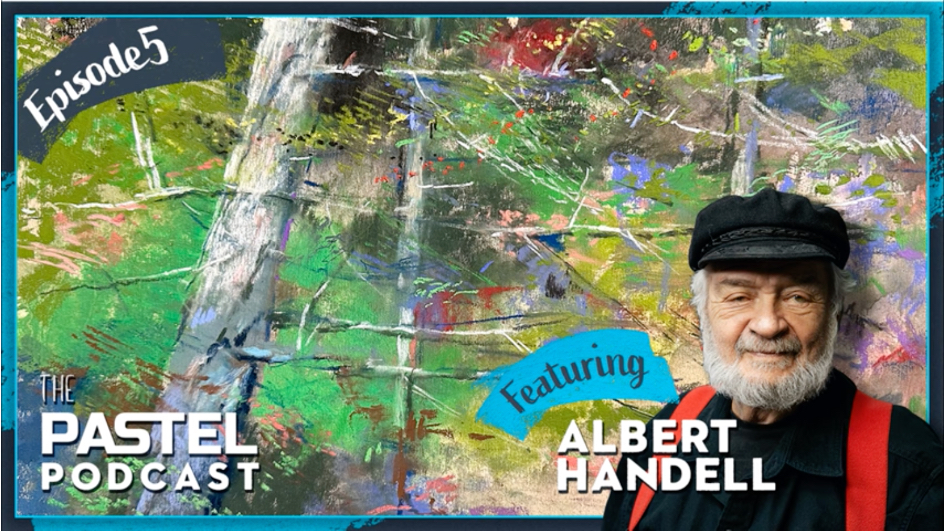
Watch this episode of The Pastel Podcast featuring Albert Handell, where the conversation traces his artistic journey — from early training at the Art Students League and years in Europe to breakthroughs with pastel and a lifelong commitment to teaching. You’ll learn why Handell is widely credited with helping popularize plein air pastel painting in the modern era.