
By Christopher Volpe
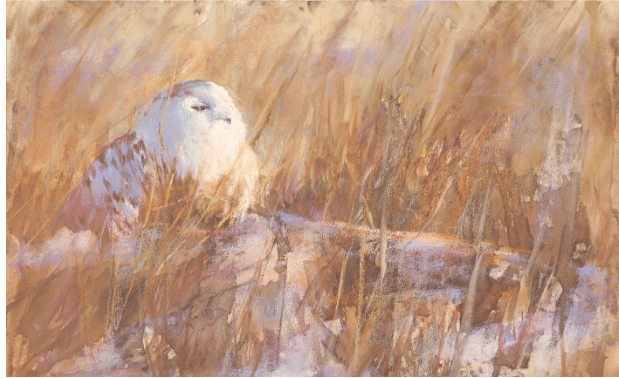
Best known for her lively depictions of birds, Lisa Regopoules says her career has finally taken flight. “The past couple of years have really been amazing,” she says. “I have seen so many of my long-term goals reached, especially being on the faculty for Art School Live, Pastel Live, and Painting and Barging in France.”
This fall marks another milestone: her first solo museum exhibition. Serenade – A Symphony in Pastels runs at the Trustees of Reservations’ Fruitlands Museum in Harvard, Massachusetts, through November 1, 2025.
Travel has been one of the unexpected gifts of her success. “I have met so many artists that I now consider friends, and they are located in many different states across the USA,” she says.
THE DISCIPLINE BEHIND THE DREAM
Lisa attributes much of her progress to consistency and persistence. “I have consistently shown up at my easel and put the mileage in,” she says. “I have had many successes and not so great outcomes along the way — it’s all part of the process. It’s so nice when all that you have worked towards begins to come together!”
She also learned early on to paint for herself. “If I am happy with it, that’s all that matters,” she says. “I never tell myself, ‘this piece is for a specific show.’ At this point in my career, my pastel painting will give me a feeling while I am working on it, so I know it’s a special one to sell or to enter in a competitive show. Having thick skin and learning to critique my own work has been crucial for advancing over the years. The rejections are all part of the game, and for me, encourage me to keep persevering.”
Teaching, she adds, has only strengthened her skills. “Teaching pastel also makes you a better painter. People all learn differently, so figuring out ways to get the message across makes you much better at doing it yourself,” she says. “Thinking of different ways of working can trigger an ‘aha’ moment. I’ve also learned so much from my students.”
A LOVE AFFAIR WITH PASTEL
“The general public has no idea what pastel is and most of the time say, ‘she’s using chalk!’” Lisa laughs. “I tell them that it’s pure pigment held together with a binder. I love the forgiving nature of pastel. If you make a mistake, a dry brush takes most of the pigment off and you’re able to correct it. I also enjoy the tactile nature of pastel, being able to hold it in my hand and apply it broadly. I like the feeling of the pastel gripping the sanded paper.”
INSPIRED BY THE OUTDOORS
A native of Massachusetts, Lisa calls herself a “plein air enthusiast.” “You’ll find me painting during all the seasons,” she says. “Whether it’s on the coast, conservation land, or in gardens — you’ll find me there. I also have a studio at my home for times that the New England weather doesn’t cooperate for plein air work. I rely on my plein air work more than a photo when sizing up to a large studio piece.”

“Plein air painting inspires me most,” she adds. “Unlike a lot of people, I thrive on change. Nothing is ever the same when you are painting outdoors, even if you are painting at the same location. Light, shadow, weather, etc., change in an instant. There’s also an energy that I feel when I am plein air painting which I do not feel in my studio.”
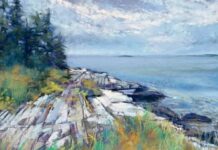
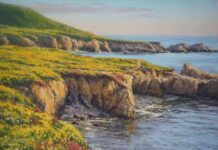
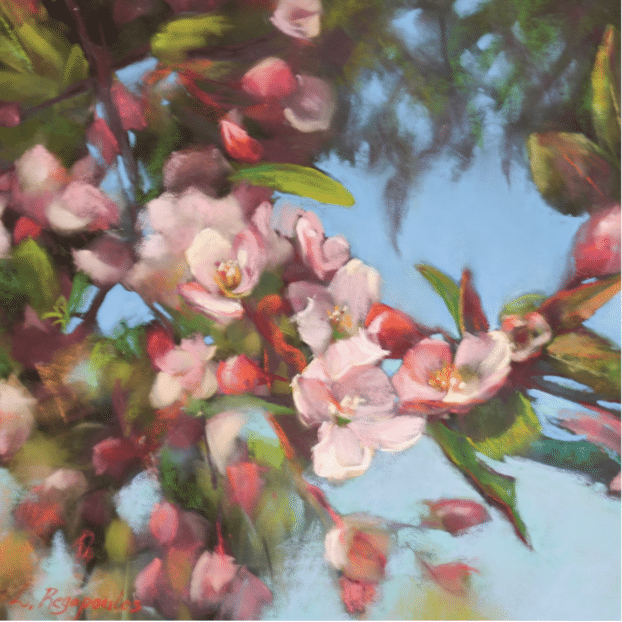
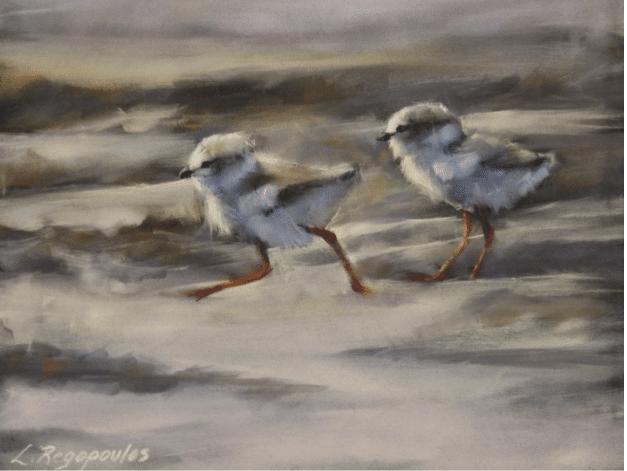
Her favorite subjects? “I do prefer to capture subject matter with amazing light or dappled shadows. Different weather conditions are exciting to me too and capture my interest for painting references. Rocky cliffs, wind and churned up water are thrilling to me, so ocean, waterfalls, and turbulent water are great subjects for me. Specific birds are captivating to me as well, especially snowy owls and plover chicks — and they are found along the coast, so if I don’t catch a glimpse of these specific birds, the ocean, dunes, etc., are always available for reference.”
ADVICE FOR ASPIRING ARTISTS
“The most important advice I would give any aspiring artist is to show up consistently at their easel!” she says. “Designate time for experimentation and play and don’t make your painting precious. When an artist considers their piece a masterpiece from the beginning, they are afraid to make a bold change or a mistake. It also leaves room for overworking.”

FROM THE EASEL TO THE EDGE
Away from the easel, Lisa channels the same energy she brings to her painting into sports and adventure. “Readers might be surprised to know,” she says, “that I used to downhill ski race and was also a rock climber.”
With her combination of enthusiasm, drive, and determination — and a hummingbird’s eye for movement and light — that’s not so surprising after all.