
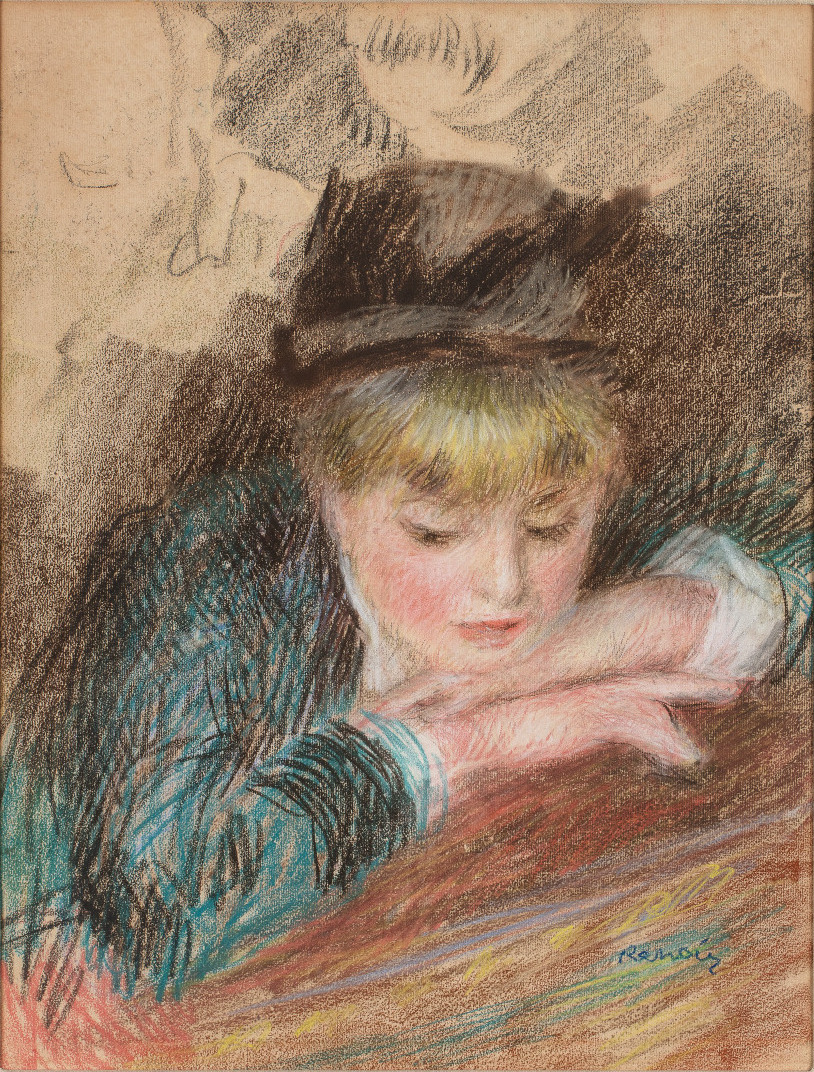
For many art lovers, the name Pierre-Auguste Renoir immediately calls to mind sunlit figures, shimmering color, and the buoyant brushwork of Impressionism. Yet behind those iconic paintings lies a quieter, more intimate body of work — drawings, watercolors, and especially pastels — that reveals how deeply Renoir relied on works on paper to shape his vision.
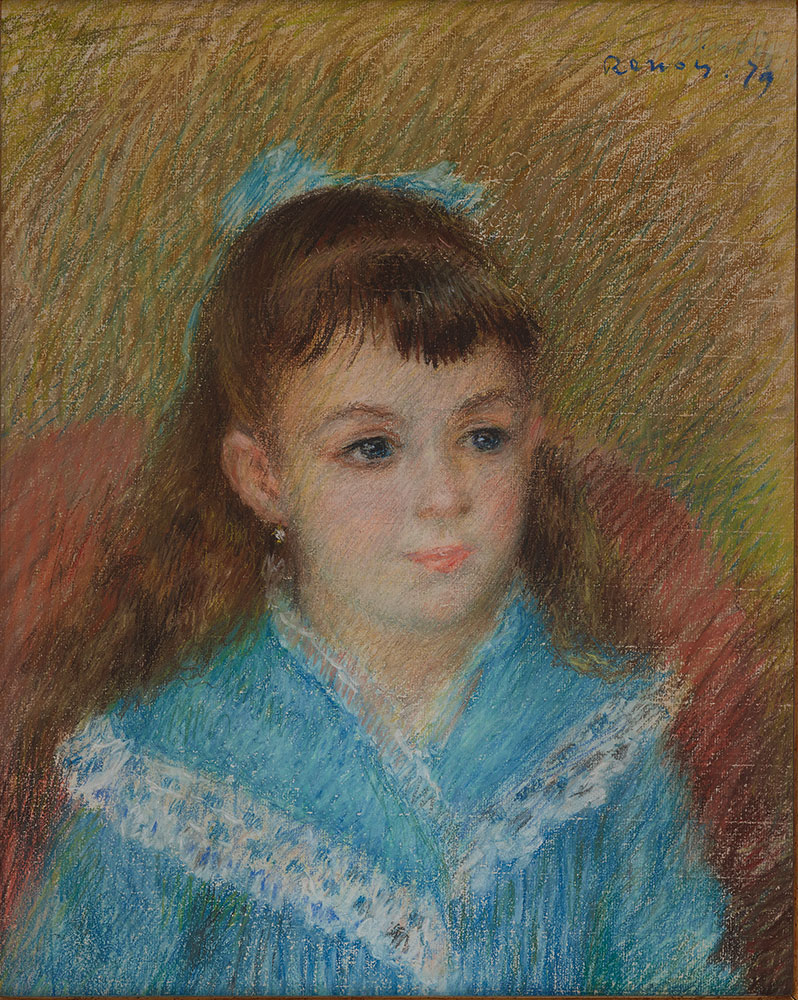
Although he’s celebrated as a master colorist, Renoir long endured the reputation of being a weak draftsman. The record tells a different story. From his earliest academic exercises in the 1850s and 1860s to the highly experimental works of his final decade, drawing was not peripheral to his practice — it was foundational. His corpus of works on paper is relatively small and varied (he likely destroyed many sheets), but what survives shows an artist constantly testing, refining, and rethinking form.
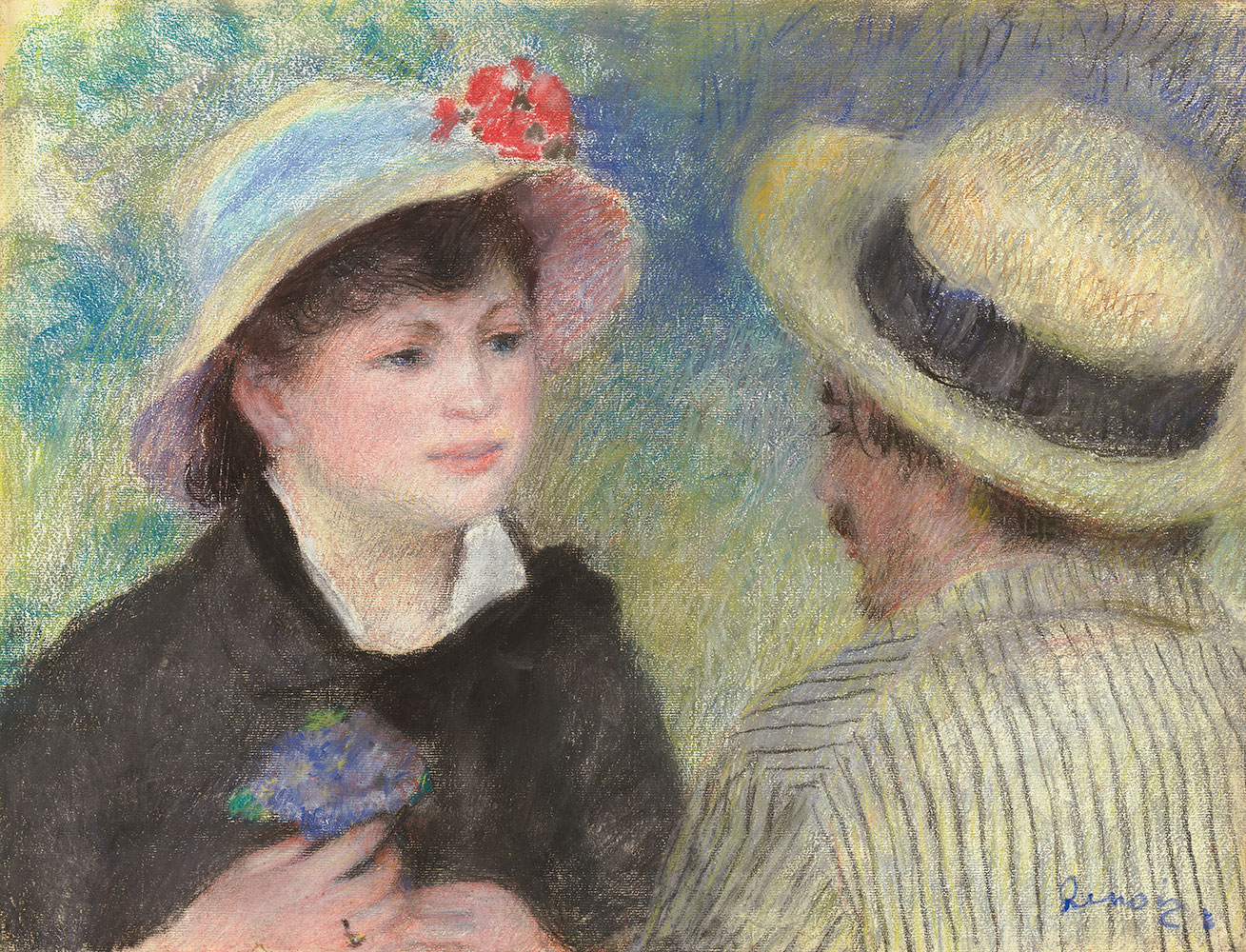
Pastel, in particular, offered Renoir something oil paint could not: immediacy paired with structure. With pastel, he could model flesh through layered color, soften contours without losing volume, and explore the turning of form in light. Far from being casual impressions, many of his pastels reveal deliberate problem-solving — adjustments in pose, shifts in weight, subtle recalibrations of line. They were laboratories for seeing.
This is especially evident in major figure compositions such as Les Baigneuses (The Bathers) and Maternité, for which Renoir produced numerous preparatory studies. He searched for what he called “the perfect form,” revisiting the same motif repeatedly until balance and rhythm aligned. As fellow Impressionist Berthe Morisot observed, “He is a first-rate draughtsman; it would be interesting to show the public all of these preparatory studies for a single painting, as they generally imagine that the Impressionists work in a most nonchalant fashion.” Her comment underscores something pastel artists understand instinctively: looseness on the surface often rests on rigorous underlying structure.
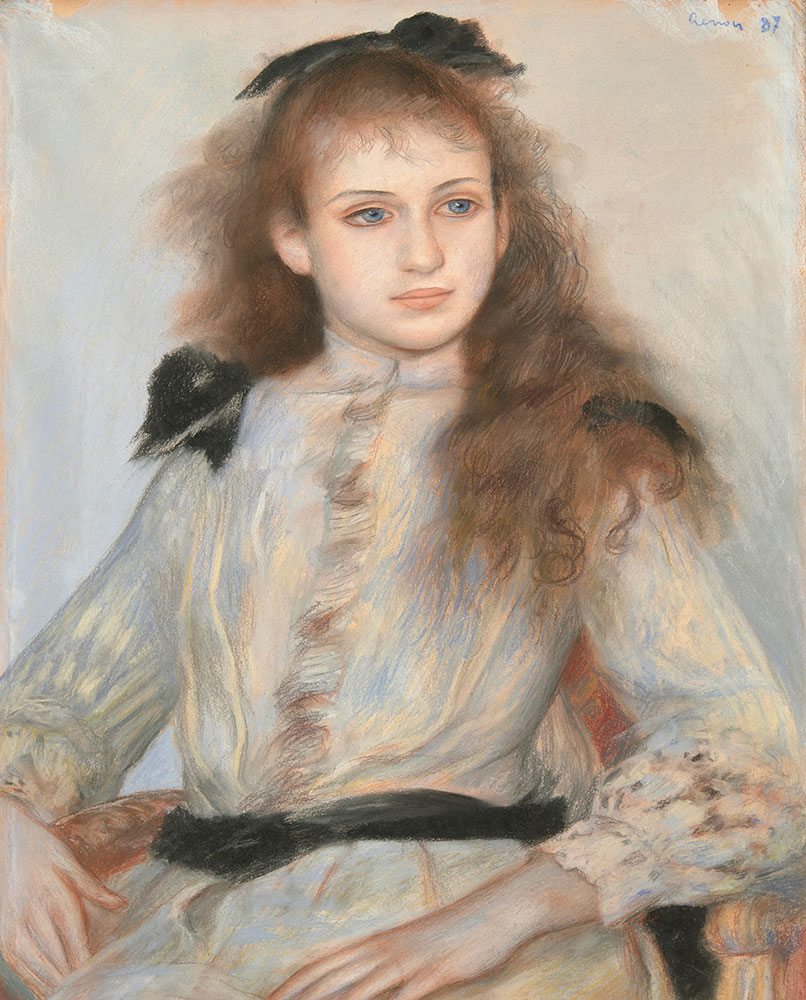
What makes Renoir’s pastels especially compelling for today’s artists is the way they bridge spontaneity and control. On paper, he explored light not as fleeting sparkle but as something that describes volume. He used color to build mass. He allowed edges to dissolve where necessary, yet anchored the composition with confident drawing. Even as he began moving away from strict Impressionism in the 1880s, seeking greater solidity and classical balance, paper remained the testing ground for that evolution.
Across five decades, Renoir returned to paper to observe urban life, rural leisure, intimate family scenes, and formal portraits. Sometimes the results were quick notations; other times they were finished, signed works meant to stand on their own. In every case, they offer entry into the artist’s inner process — the negotiation between eye and hand, impulse and correction, color and contour.
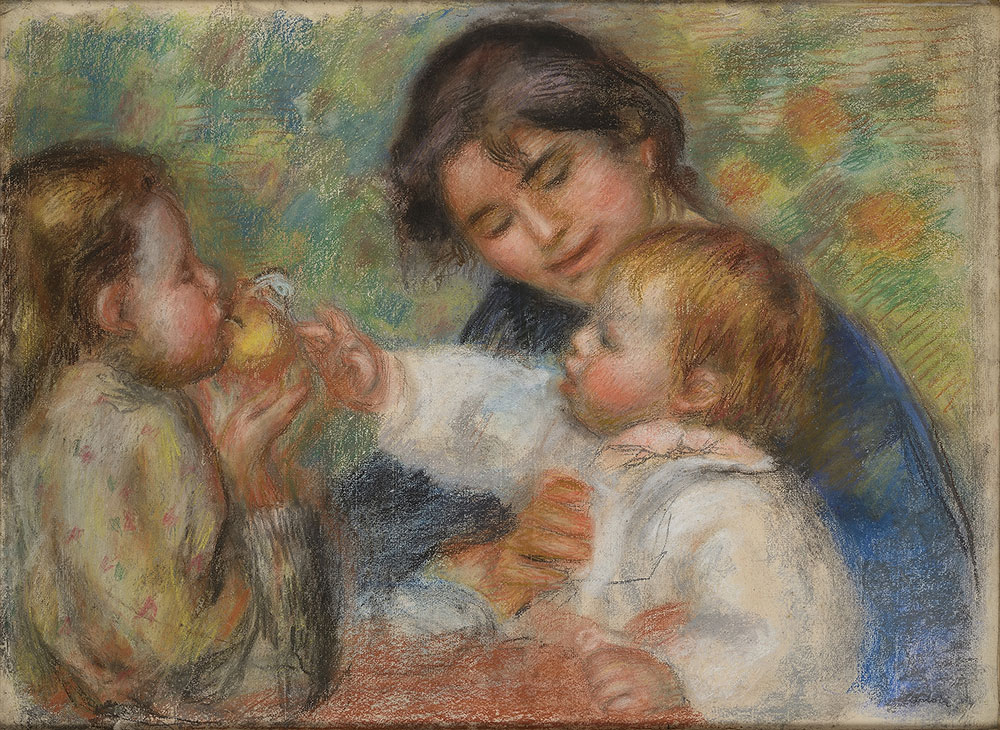
For pastel painters today, Renoir’s example is a powerful reminder that drawing and color are not opposites. They are partners. Structure strengthens softness. Repetition deepens spontaneity. And even the most luminous surface begins with careful looking.
Renoir’s pastels invite us to reconsider what it means to “sketch.” On paper, he wasn’t merely preparing for paintings — he was thinking.