
When heavy flooding swept through southeastern Wisconsin last August, it reshaped more than the landscape of downtown Menomonee Falls — it reshaped a painting.
Mary Beth Drabiszczak
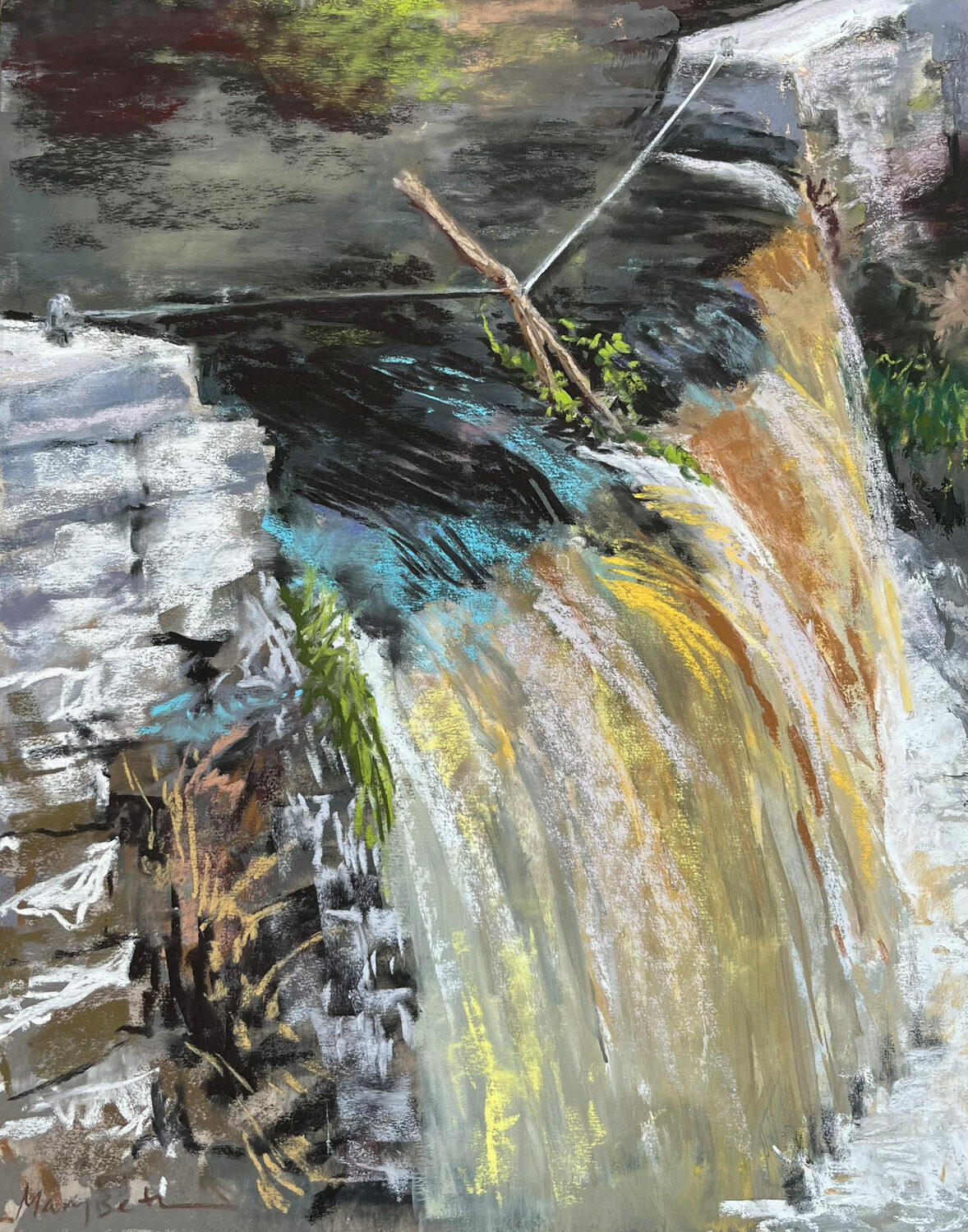
“As an artist, I like to conceptualize titles and themes for work before they come into fruition — especially en plein air,” says Mary Beth Drabiszczak. “Reinforcing the city’s namesake, I thought it would be fitting to paint the falls in town. And with all the rain, the sheer quantity of rushing water was so captivating in the overflowed state.
“Ironically, the most crucial decision I made during the painting process was the dilemma of whether or not to include the branch,” she says. “When I first created a compositional study and began this piece, there was only rushing water and a sloped stone. As I was further along in the painting, I watched this large branch float to the edge of the waterfall and snag the line; I was mesmerized.”
That moment demanded a choice.
“Ultimately, I knew in my gut that I needed to include the branch to authentically capture this fleeting moment in time, but it was definitely a risk as I had already rendered most of the water. In hindsight, I’m so thankful that I trusted my instincts and reacted optimistically to change. The composition needed an area of visual interest, and the tension of the caught branch created a dynamic balance across the water.”
Technically, she was prepared for whatever the river delivered.
“UART 400 grit board is my go-to for plein air as it takes multiple layers and accepts wet media,” she says. “For this piece, I used rubbing alcohol to spread the pastel so that I could create veils within the water. When using rubbing alcohol with pastel, I opt for a one-inch foam brush so that I’ve got a tool that reinforces the marks I create with rectangular sticks. The other brush I always have on hand is a blunt stencil brush to dust away pastel for dry transparencies.”
The result is a painting that feels immediate — water surging, tension building, motion suspended.
And her advice to fellow artists is as steady as the current was wild that day:
“Persistence is key — an artwork could be rejected by one show yet win an award in a separate endeavor. It never hurts to submit. Keep track of your entries and celebrate your efforts no matter the result.”
In the end, the painting is about more than floodwaters. It’s about responding — to change, to instinct, to the fleeting moment that appears without warning and asks to be seen.
Mary Beth Drabiszczak’s “Interrupted Flow” won Best Pastel in the October PleinAir Salon art competition. Could the pastel painting on your easel right now be next month’s winner?