
“Painting to me is like leaving a love note of hope and inspiration to every viewer who sees it,” says artist and teacher Richard D. Wilson, Jr., who describes himself as hopelessly in love with pastel. The medium’s immediacy, vibrancy, and willingness to meet him halfway have made it his language of choice — especially when painting the figures and stories that define his artistic mission.
Wilson’s journey as an artist began at age 8, seated beside his father — an artist and mathematician — sketching toys at the kitchen table. That early encouragement, paired with the thrill of winning a school art contest, planted the dream he carried into adulthood: to become a full-time artist. Scrapbooks full of photos and mementos chart his steady climb, reminders of the persistence and purpose that now animate his work.
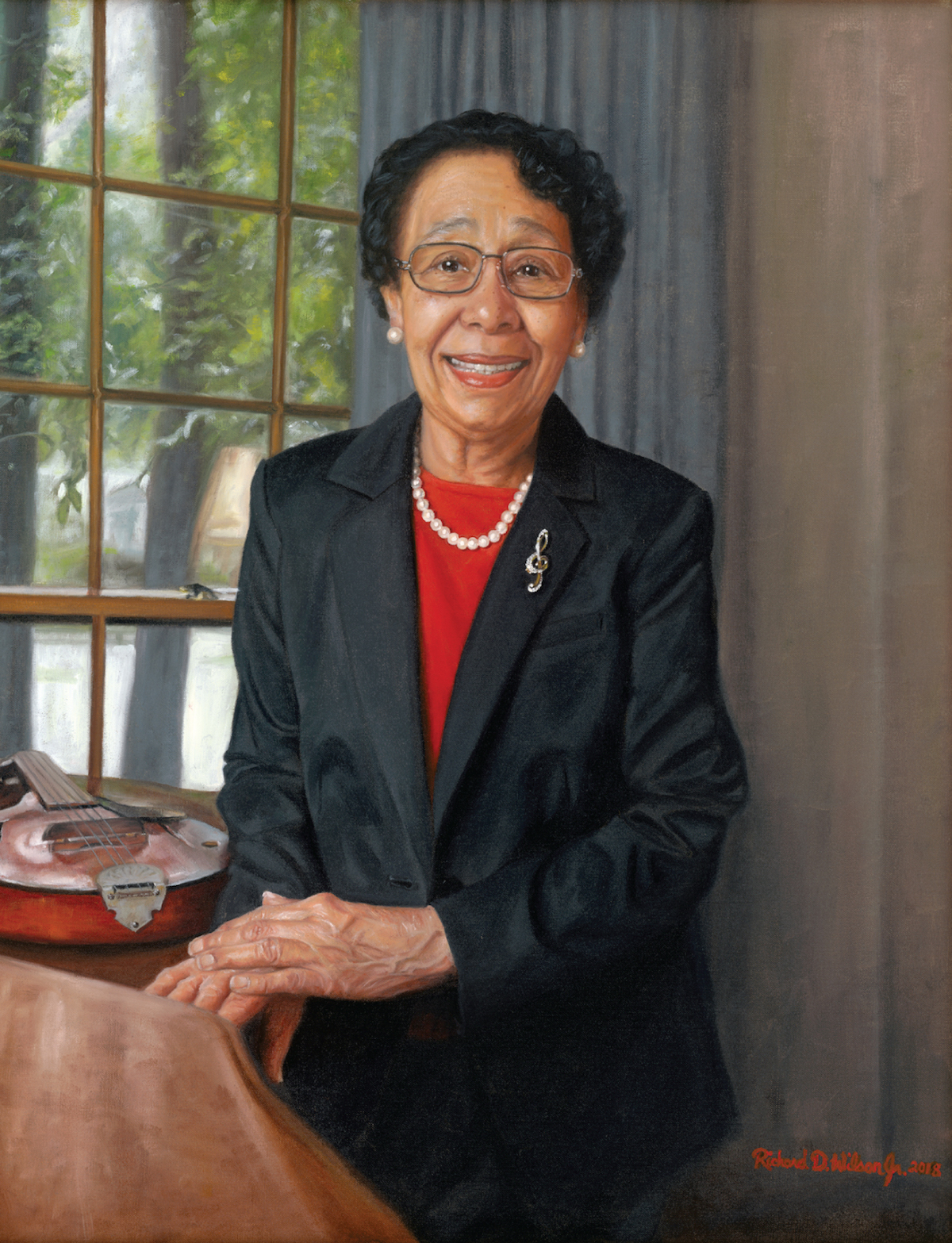
Today, Wilson’s paintings appear in prestigious public and private collections, from the North Carolina Courthouse — where his portrait of Congressman George Henry White honors a leader who fought for civil rights during the Jim Crow era — to the University of Georgia, which commissioned six portraits beginning with his depiction of trailblazer Mary Frances Early, the university’s first African American graduate. Even Hollywood has taken notice, placing his works in major films and television productions.
Though Wilson paints landscapes and portraits in both oil and pastel, it is his pastel figurative works that carry his deepest intentions. His celebrated series “In His Shadow” is a powerful example — a body of work that pairs children with historical figures whose courage and determination shaped American history. Through careful composition and subtle symbolism, Wilson connects youthful imagination with the giants whose stories still light the way.
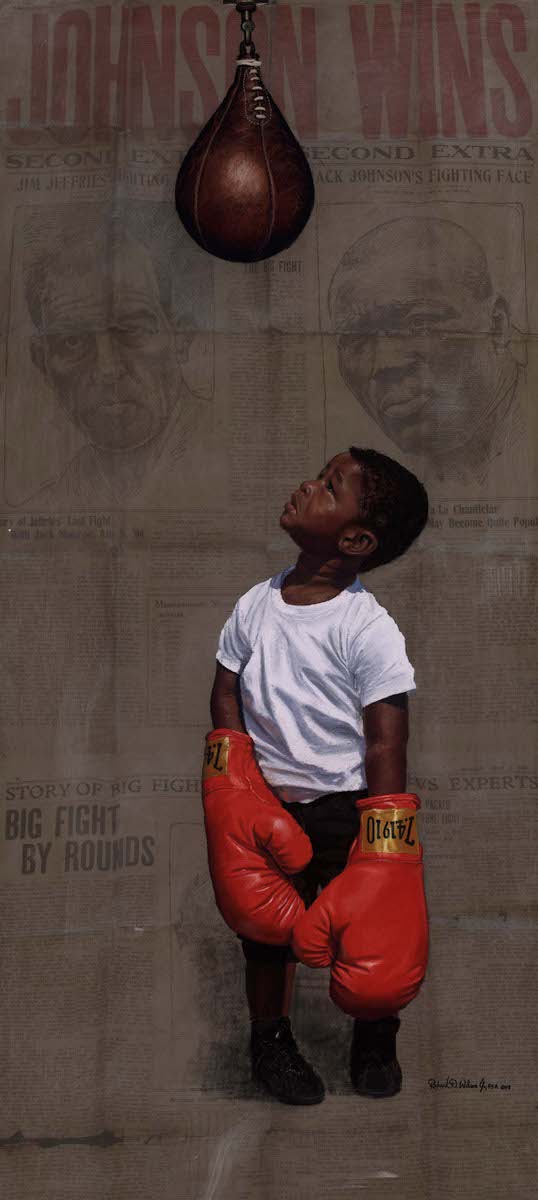
One of the most remarkable works in the series, “In His Shadow (Jack Johnson),” earned First Prize in the 20th Annual Pastel 100 Competition. Another, “In His Shadow (Muhammad Ali),” carries an even more intimate meaning for the artist. Ali was a hero of Wilson’s father, and Wilson dreamed of collaborating with him one day. When his father became ill, Wilson gently pressed paint onto his father’s fingertip and recorded the prints onto several sheets of paper. One of these treasured sheets became the foundation of the Ali portrait — the green fingerprints visible on the left glove — surrounded by Wilson’s composition honoring the iconic boxer and his own father’s legacy.
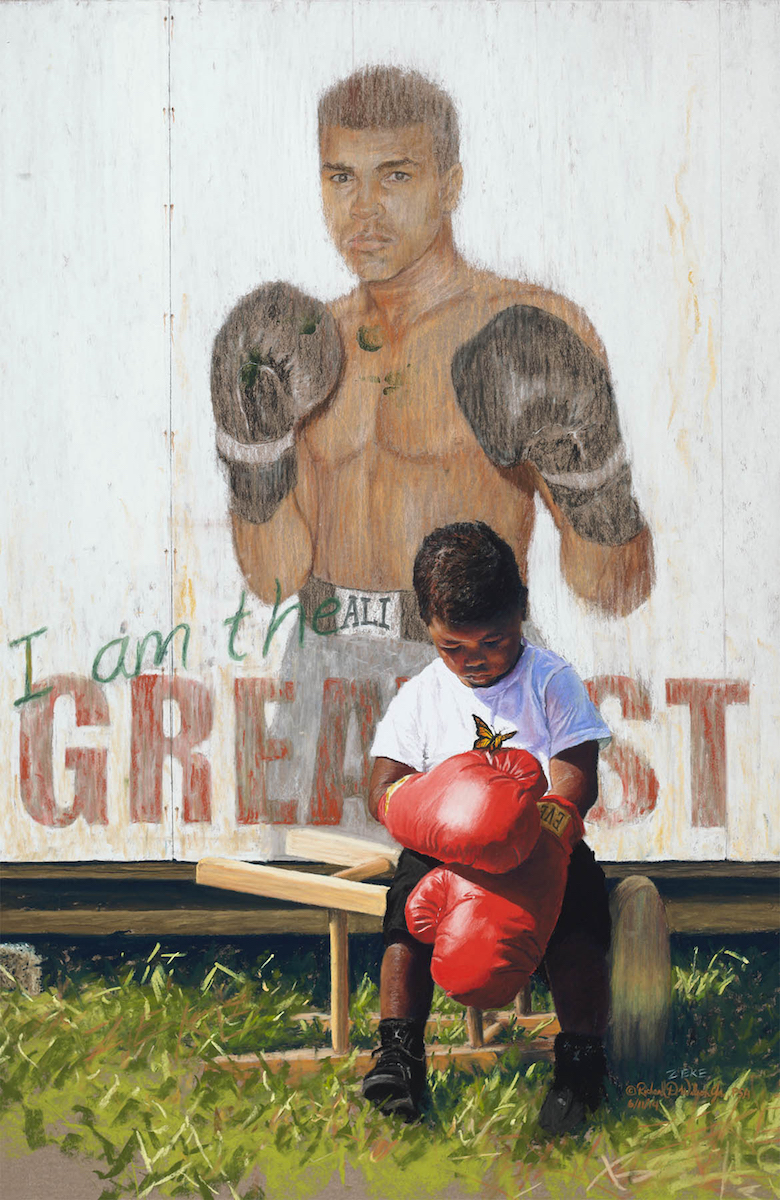
“I own four other sheets with my father’s prints,” he says. “With one of them, I hope to make a piece showing myself as a child, drawing while he watches me.” In the Ali painting, the hidden tributes continue: the word Zeke — his father’s signature — appears three times in the grass, honoring both his father and Wilson’s two brothers.
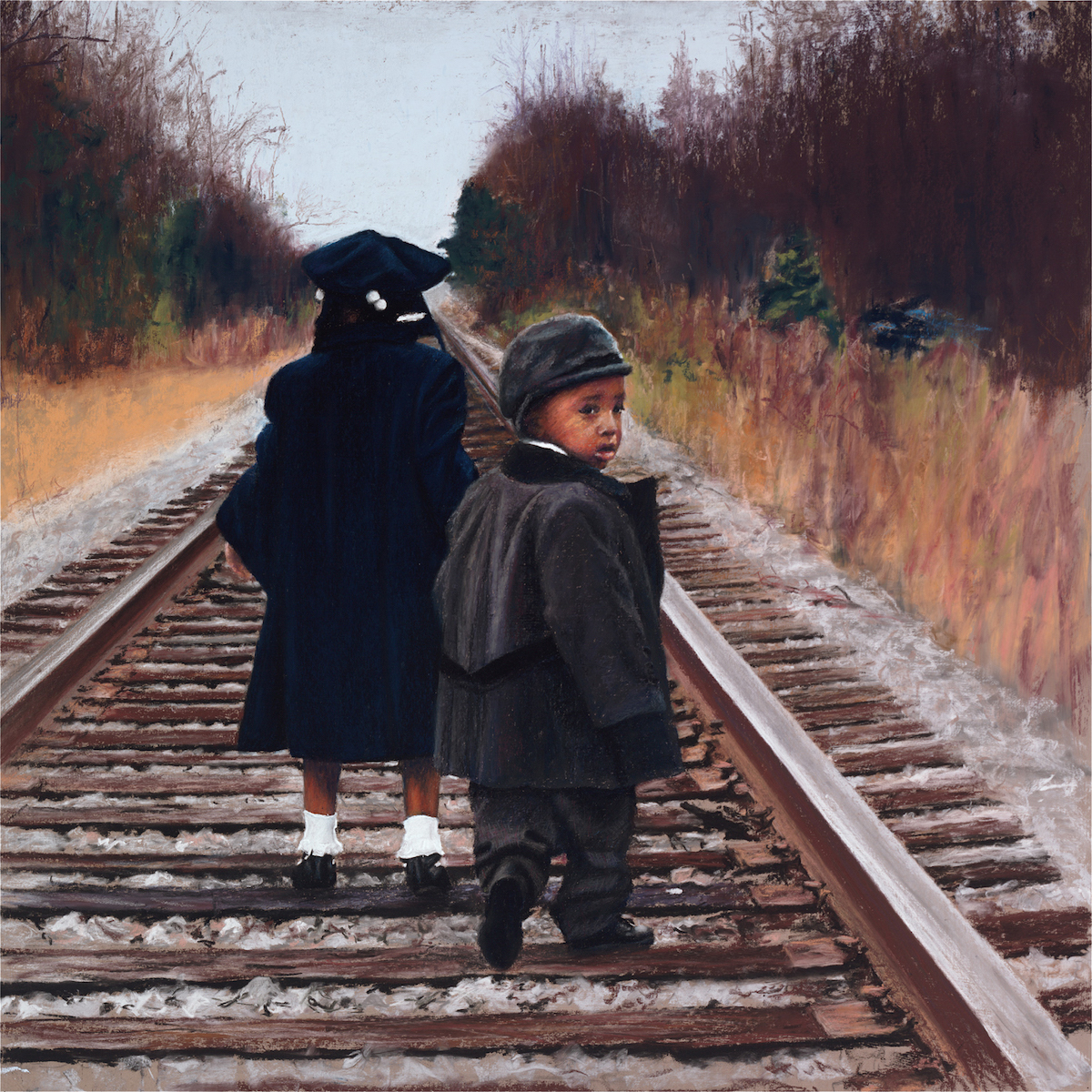
Before pursuing art full-time, Wilson spent years teaching, a role he left reluctantly. That tension is beautifully captured in “Faithful Journey,” where a young boy looks back, representing the part of Wilson who still cherished the classroom, while a young girl — his forward-moving self — leads him toward the future. “There is no regret in the child,” Wilson notes. And there is no regret in the artist, who recognizes that he continues to teach — only now through images, stories, and history brought to life in pastel.
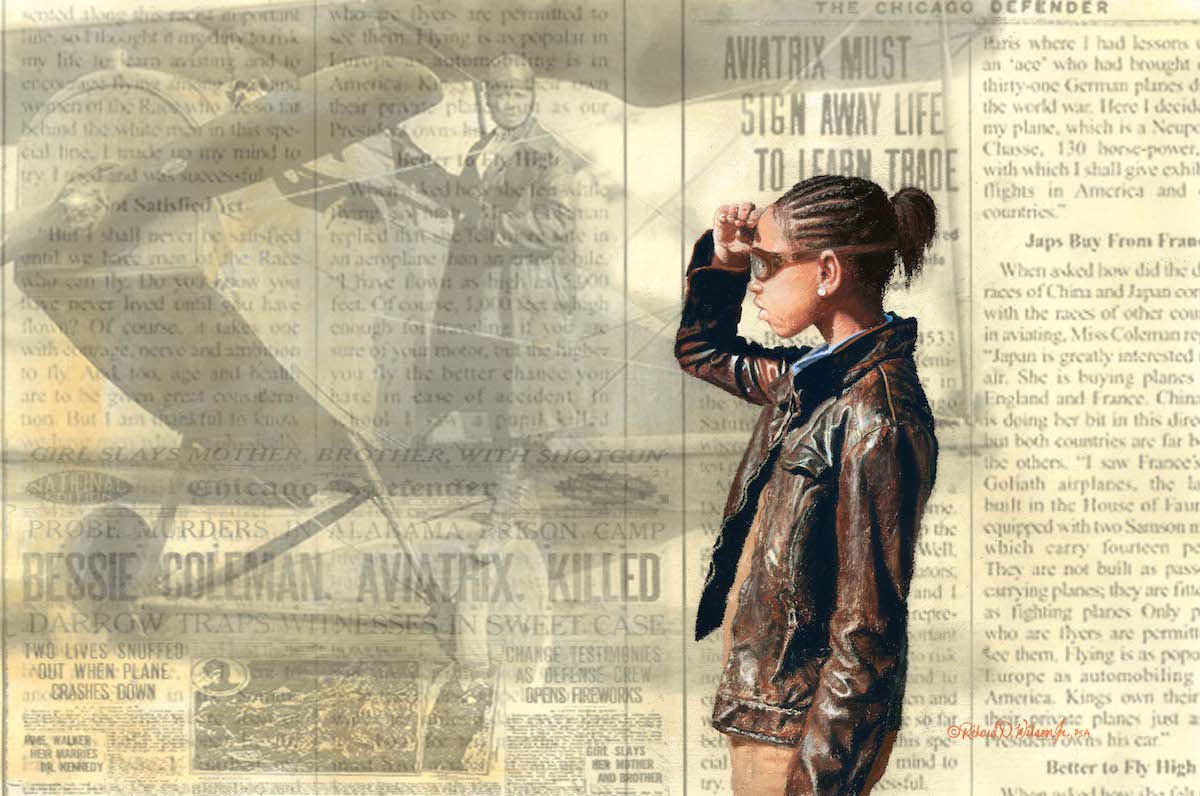
His painting “Bessie Coleman” exemplifies his commitment to spotlighting remarkable historical figures too often overlooked. Coleman, the first African American woman to earn a pilot’s license, appears both as the aviator herself and through the eyes of her daughter, set against mastheads from The Chicago Defender reporting her tragic death. “The stories of these people are so incredible that they need to be known by everyone,” Wilson says. “No matter their race or gender. You have to be inspired by it.”
For Wilson, every painting is an invitation — to remember, to imagine, to hope. With vibrant color and a heart tuned to history, he uses pastel to honor the past while lighting the way for future generations, proving that art can be both a mirror and a beacon for all who pause to look.